Henry Miller
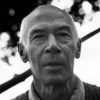
Henry Miller
Henry Valentine Millerwas an American writer. He was known for breaking with existing literary forms, developing a new sort of semi-autobiographical novel that blended character study, social criticism, philosophical reflection, explicit language, sex, surrealist free association and mysticism. His most characteristic works of this kind are Tropic of Cancer, Black Spring, Tropic of Capricornand The Rosy Crucifixion trilogy, all of which are based on his experiences in New York and Paris, and all of which were banned in the United...
NationalityAmerican
ProfessionAutobiographer
Date of Birth26 December 1891
CityNew York City, NY
CountryUnited States of America
All growth is a leap in the dark.
Why change the world? Change worlds!
Next to love friendship, in my opinion, is the most valuable thing life has to offer.
If one believes, then miracles occur.
Music is the can-opener of the soul.
Writing, like life itself, is a voyage of discovery. The adventure is a metaphysical one: it is a way of approaching life indirectly, of acquiring a total rather than a partial view of the universe. The writer lives between the upper and lower worlds: he takes the path in order eventually to become the path himself.
It is no accident that propels people like us to Paris.
At Epidaurus, in the stillness, in the great peace that came over me, I heard the heart of the world beat. I know what the cure is: it is to give up, to relinquish, to surrender, so that our little hearts may beat in unison with the great heart of the world.
The more I wrote, the more I became a human being. The writing may have seemed monstrous (to some) for it was a violation, but I became a more human individual because of it. I was getting the poison out of my system.
Writing, like life itself, is a voyage of discovery.
Whenever a taboo is broken, something good happens, something vitalizing. Taboos after all are only hangovers, the product of diseased minds, you might say, of fearsome people who hadn't the courage to live and who under the guise of morality and religion have imposed these things upon us.
The vast difference between astrology and other sciences, if I may put it thus, is that astrology deals not with facts but with profundities. The solid ground on which the scientist pretends to rest gives way, in astrology, to imponderables.
The history of the world is the history of the privileged few.
The learning we received only tended to obscure our vision. From the day we went to school we learned nothing; on the contrary, we were made obtuse, we were wrapped in a fog of words and abstractions.