Heraclitus
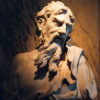
Heraclitus
Heraclitus of Ephesuswas a pre-Socratic Greek philosopher, a native of the Greek city Ephesus, Ionia, on the coast of Asia Minor. He was of distinguished parentage. Little is known about his early life and education, but he regarded himself as self-taught and a pioneer of wisdom. From the lonely life he led, and still more from the apparently riddled and allegedly paradoxical nature of his philosophy and his stress upon the needless unconsciousness of humankind, he was called "The Obscure"...
NationalityGreek
ProfessionPhilosopher
evil disease hunger
It is by disease that health is pleasant; by evil that good is pleasant; by hunger, satiety; by weariness, rest.
appreciation sweet disease
To get everything you want is not a good thing. Disease makes health seem sweet. Hunger leads to the appreciation of being full-fed. Tiredness creates the enjoyment of resting
political sacred disease
Bigotry is the sacred disease.
religion noble disease
Religion is a disease, but it is a noble disease.
goes greek-philosopher workers
Even sleepers are workers and collaborators in what goes on in the Universe.
beautiful all-things
To God all things are beautiful and good and just.
night impossible distinction
Could you tell night from day? No, I regard all such distinctions as logically impossible.
character destiny our-destiny
Character is our destiny.
constant
Nothing is constant except change
work toiling weariness
It is weariness to keep toiling at the same things so that one becomes ruled by them.
life-is constant
The only constant in life is change
mixtures decay strife
Where there is no strife there is decay: 'The mixture which is not shaken decomposes.'
ambition needs results
The results are in great need greater ambition.
desire outcomes needs
The outcomes are in incredible need more prominent desire.