Herbert Read
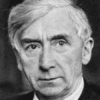
Herbert Read
Sir Herbert Edward Read, DSO, MCwas an English art historian, poet, literary critic and philospher, best known for numerous books on art, which included influential volumes on the role of art in education. Read was co-founder of the Institute of Contemporary Arts. He was one of the earliest English writers to take notice of existentialism...
NationalityEnglish
ProfessionPoet
world violence violent
Revolt, it will be said, implies violence; but this is an outmoded, an incompetent conception of revolt. The most effective form of revolt in this violent world we live in is non-violence.
wise art moving
Art is always the index of social vitality, the moving finger that records the destiny of a civilization. A wise statesman should keep an anxious eye on this graph, for it is more significant than a decline in exports or a fall in the value of a nation's currency.
two luxury space
The peculiarity of sculpture is that it creates a three-dimensional object in space. Painting may strive to give on a two-dimensional plane, the illusion of space, but it is space itself as a perceived quantity that becomes the peculiar concern of the sculptor. We may say that for the painter space is a luxury; for the sculptor it is a necessity.
mean cutting practice
This is the essential distinction--even opposition--between the painting and the film: the painting is composed subjectively, thefilm objectively. However highly we rate the function of the scenario writer--in actual practice it is rated very low--we must recognize that the film is not transposed directly and freely from the mind by means of a docile medium like paint, but must be cut piece-meal out of the lumbering material of the actual visible world.
memories men feelings
Sentir mon Cœur is a privilege only granted to the exceptional man the one who has the ability to find words that exactly (or, to himself, convincingly) express his feelings. ... The value of words help to define the feeling itself. ... The common failure is to allow habitual words and phrases, flowing spontaneously from the memory, to determine and deform the feelings.
artist purpose fundamentals
The fundamental purpose of the artist is the same as that of a scientist: to state a fact.
order ideas mind
Sensibility... is a direct and particular reaction to the separate and individual nature of things. It begins and ends with the sensuous apprehension of colour, texture and formal relations; and if we strive to organize these elements, it is not with the idea of increasing the knowledge of the mind, but rather in order to intensify the pleasure of the senses.
artist discovery desire
If we persist in our restless desire to know everything about the universe and ourselves, then we must not be afraid of what the artist brings back from his voyage of discovery.
art consciousness exposure
Art is an indecent exposure of the consciousness.
space vision spontaneity
Spontaneity is not enough - or, to be more exact, spontaneity is not possible until there is an unconscious coordination of form, space and vision.
art exercise skills
The classicist, and the naturalist who has much in common with him, refuse to see in the highest works of art anything but the exercise of judgement, sensibility, and skill. The romanticist cannot be satisfied with such a normal standard; for him art is essentially irrational - an experience beyond normality, sometimes destructive of normality, and at the very least evocative of that state of wonder which is the state of mind induced by the immediately inexplicable.
ethos literature deny
What I do deny is that you can build any enduring society without some such mystical ethos.
equality literature world
To realize that new world we must prefer the values of freedom and equality above all other values - above personal wealth, technical power and nationalism.
progress literature groups
The farther a society progresses, the more clearly the individual becomes the antithesis of the group.