Hermann Hesse
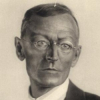
Hermann Hesse
Hermann Karl Hessewas a German-born Swiss poet, novelist, and painter. His best-known works include Steppenwolf, Siddhartha, and The Glass Bead Game, each of which explores an individual's search for authenticity, self-knowledge and spirituality. In 1946, he received the Nobel Prize in Literature...
NationalityGerman
ProfessionPoet
Date of Birth2 July 1877
CityCalw, Germany
CountryGermany
above carefully comfort cursed detested fat hated middle optimism preserved prosperous
What I always hated and detested and cursed above all things was this contentment, this healthiness and comfort, this carefully preserved optimism of the middle classes, this fat and prosperous brood of mediocrity.
fate destiny what-matters
If what matters in a person's existence is to accept the inevitable consciously, to taste the good and bad to the full and to make for oneself a more individual, unaccidental and inward destiny alongside one's external fate, then my life has been neither empty nor worthless.
fate wind next
My resolve to die was not the whim of an hour. It was the ripe, sound fruit that had slowly grown to full size, lightly rocked by the winds of fate whose next breath would bring it to the ground.
fate fighting suffering
Siddhartha stopped fighting his fate this very hour, and he stopped suffering.
father childhood firsts
It was the first rent in the holy image of my father, it was the first fissure in the columns that had upheld my childhood, which every individual must destroy before he can become himself.
children father eye
A father can pass on his nose and eyes and even his intelligence to his child, but not his soul. In every human being the soul is new
children spring father
A tree says: My strength is trust. I know nothing about my fathers, I know nothing about the thousand children that every year spring out of me. I live out the secret of my seed to the very end, and I care for nothing else. I trust that God is in me. I trust that my labor is holy. Out of this trust I live.
fate two aphorism
One of the aphorisms occurred to me now and I wrote it under the picture: "Fate and temperament are two words for one and the same concept." That was clear to me now.
running heart fate
. Deeply, he felt the love for the run-away in his heart, like a wound, and he felt at the same time that this wound had not been given to him in order to turn the knife in it, that it had to become a blossom and had to shine. , the wound was not blossoming yet, his heart was still fighting his fate, cheerfulness and victory were not yet shining from his suffering. Nevertheless, he felt hope
teacher truth father
Gaze into the fire, into the clouds, and as soon as the inner voices begin to speak... surrender to them. Don't ask first whether it's permitted, or would please your teachers or father or some god. You will ruin yourself if you do that.
considered paradise recognized seldom until
Paradise is seldom recognized as such until it is considered from the outside.
cannot filled knowledge man sustained teach utter wisdom
Knowledge can be communicated, but wisdom cannot. A man can find it, he can live it, he can be filled and sustained by it, but he cannot utter or teach it.
beyond capable dividing drawn line mind opposites pairs passing
Our mind is capable of passing beyond the dividing line we have drawn for it. Beyond the pairs of opposites of which the world consists, other, new insights begin.
children educate happiness rejoices
He does not educate children but rejoices in their happiness