Hermann von Helmholtz
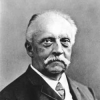
Hermann von Helmholtz
Hermann Ludwig Ferdinand von Helmholtzwas a German physician and physicist who made significant contributions to several widely varied areas of modern science. In physiology and psychology, he is known for his mathematics of the eye, theories of vision, ideas on the visual perception of space, color vision research, and on the sensation of tone, perception of sound, and empiricism. In physics, he is known for his theories on the conservation of energy, work in electrodynamics, chemical thermodynamics, and on a...
NationalityGerman
ProfessionPhysicist
Date of Birth31 August 1821
CountryGermany
Music stands in a much closer connection with pure sensation than any of the other arts.
Windmills, which are used in the great plains of Holland and North Germany to supply the want of falling water, afford another instance of the action of velocity. The sails are driven by air in motion - by wind.
The quantity of force which can be brought into action in the whole of Nature is unchangeable, and can neither be increased nor diminished.
The originator of a new concept...finds, as a rule, that it is much more difficult to find out why other people do not understand him, than it was to discover the new truth.
When young Galileo, then a student at Pisa, noticed one day during divine service a chandelier swinging backwards and forwards, and convinced himself, by counting his pulse, that the duration of the oscillations was independent of the arc through which it moved, who could know that this discovery would eventually put it in our power, by means of the pendulum, to attain an accuracy in the measurement of time till then deemed impossible, and would enable the storm-tossed seaman in the most distant oceans to determine in what degree of longitude he was sailing?
In speaking of the work of machines and of natural forces we must, of course, in this comparison eliminate anything in which activity of intelligence comes into play. The latter is also capable of the hard and intense work of thinking, which tries a man just as muscular exertion does.
There is a kind, I might almost say, of artistic satisfaction, when we are able to survey the enormous wealth of Nature as a regularly ordered whole a kosmos, an image of the logical thought of our own mind.