Hideki Tojo
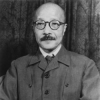
Hideki Tojo
Hideki Tojo; December 30, 1884 – December 23, 1948) was a general of the Imperial Japanese Army, the leader of the Imperial Rule Assistance Association, and the 40th Prime Minister of Japan during much of World War II, from October 17, 1941, to July 22, 1944. As Prime Minister, he was responsible for ordering the attack on Pearl Harbor, which initiated war between Japan and the United States, although planning for it had begun in April 1941 before he entered office...
NationalityJapanese
ProfessionPolitician
Date of Birth30 December 1884
CityKojimachi, Japan
CountryJapan
On October 18, 1941, I suddenly received a mandate from His Majesty to form a new cabinet. This was completely unexpected, and when I was summoned to the Imperial Palace I thought I would be questioned on the army's point of view
Justice has nothing to do with victor nations and vanquished nations, but must be a moral standard that all the world's peoples can agree to. To seek this and to achieve it - that is true civilization
It goes without saying that when survival is threatened, struggles erupt between peoples, and unfortunate wars between nations result.
With options thus foreclosed, in order to protect and defend the nation and clear the obstacles that stood in its path, a decisive appeal to arms was made.
Throughout that period, Japan had made honest efforts to keep the destruction of war from spreading and, based on the belief that all nations of the world should find their places, had followed a policy designed to restore an expeditious peace between Japan and China.
The reason was the failure of both Japan and China to understand each other and the inability of America and the European powers to sympathize, without prejudice, with the peoples of East Asia
The moment the first American soldier sets foot on the Japanese mainland, all prisoners of war will be shot.
Australia and New Zealand are now threatened by the might of the Imperial Japanese forces, and both of them should know that any resistance is futile.
I would point out that Japan's proposal at the Versailles Peace Conference on the principle of racial equality was rejected by delegates such as those from Britain and the United States
Therefore, if one were to consider that there was virtually no possibility of success through the US-Japan negotiations, the military and economic pressures would only force Japan into further crisis if time were allowed to pass in vain.
Even military ministers have no more than a certain amount of control. It is customary that they have the right and the power to participate, from a political and military point of view, in the planning of actual operations