Hugo Black
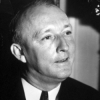
Hugo Black
Hugo Lafayette Blackwas an American politician and jurist. A member of the Democratic Party, Black represented Alabama in the United States Senate from 1927 to 1937, and served as an Associate Justice of the Supreme Court of the United States from 1937 to 1971. Black was nominated to the Supreme Court by President Franklin D. Roosevelt and confirmed by the Senate by a vote of 63 to 16He was first of nine Roosevelt nominees to the Court, and he outlasted...
NationalityAmerican
ProfessionSupreme Court Justice
Date of Birth27 February 1886
CountryUnited States of America
Our Constitution was not written in the sands to be washed away by each wave of new judges blown in by each successive political wind.
The United States has a system of taxation by confession
Words uttered under coercion are proof of loyalty to nothing but self-interest. Love of country must spring from willing hearts and free minds.
In my judgment the people of no nation can lose their liberty so long as a Bill of Rights like ours survives and its basic purposes are conscientiously interpreted, enforced and respected so as to afford continuous protection against old, as well as new, devices and practices which might thwart those purposes. I fear to see the consequences of the Court's practice of substituting its own concepts of decency and fundamental justice for the language of the Bill of Rights as its point of departure in interpreting and enforcing that Bill of Rights.
It is my belief that there are "absolutes" in our Bill of Rights, and that they were put there on purpose by men who knew what words meant and meant their prohibitions to be "absolutes."
Loyalty must arise spontaneously from the hearts of people who love their country and respect their government.
Paramount among the responsibilities of a free press is the duty to prevent any part of the government from deceiving the people and sending them off to distant lands to die of foreign fevers and foreign shot and shell.
The history of governmentally established religion, both in England and in this country, showed that whenever government had allied itself with one particular form of religion, the inevitable result had been that it had incurred the hatred, disrespect and even contempt of those who held contrary beliefs.
When the power, prestige, and financial support of government is placed behind a particular religious belief, the indirect coercive pressure upon religious minorities to conform to the prevailing officially approved religion is plain.
The interest of the people lies in being able to join organizations, advocate causes, and make political "mistakes" without being subjected to governmental penalties.
[H]istory showed that many people had lost their respect for any religion that had relied upon the support of government to spread its faith.
I am for the First Amendment from the first word to the last. I believe it means what it says.
From the very beginning, our state and national constitutions and laws have laid great emphasis on procedural and substantive safeguards designed to assure fair trials before impartial tribunals in which every defendant stands equal before the law. This noble ideal cannot be realized if the poor man charged with crime has to face his accusers without a lawyer to assist him.
Compelling a man by law to pay his money to elect candidates or advocate law or doctrines he is against differs only in degree, if at all, from compelling him by law to speak for a candidate, a party, or a cause he is against. The very reason for the First Amendment is to make the people of this country free to think, speak, write and worship as they wish, not as the Government commands.