Iris Murdoch
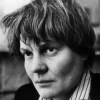
Iris Murdoch
Dame Jean Iris Murdoch DBEwas an Irish novelist and philosopher, best known for her novels about good and evil, sexual relationships, morality, and the power of the unconscious. Her first published novel, Under the Net, was selected in 1998 as one of Modern Library's 100 best English-language novels of the 20th century. In 1987, she was made a Dame Commander of the Order of the British Empire. Her books include The Bell, A Severed Head, The Red and the Green,...
NationalityIrish
ProfessionNovelist
Date of Birth15 July 1919
CountryIreland
So we live; a spirit that broods and hovers over the continual death of time, the lost meaning, the unrecaptured moment, the unremembered face, until the final chop that ends all our moments and plunges that spirit back into the void from which it came.
Real misery cuts off all paths to itself.
There is nothing like the bootless solitude of those who are caged together.
there is a natural tribal hostility between the married and the unmarried. I cannot stand the shows so often quite instinctively put on by married people to insinuate that they are not only more fortunate but in some way more moral than you are.
Nothing is more beautifully and acceptably self-assertive than good singing.
being homosexual doesn't determine a man's whole character any more than being heterosexual does.
We must live by the light of our own self-satisfaction, through that secret vital busy inwardness which is even more remarkable than our reason.
Of course men play roles, but women play roles too, blanker ones. They have, in the play of life, fewer good lines.
to be understood is not a human right. Even to understand oneself is not a human right.
Most real relationships are involuntary.
I think philosophy is extremely good training for anyone who wants to do anything. Although that is an idea which people may speak scornfully of now, I think it does teach one to
for most of us the space between 'dreaming on things to come' and 'it is too late, it is all over' is too tiny to enter.
I think the novel is essentially a comic form (tragedy is for the theatre), not meaning by that full of jokes, but that it is about the absurd detail of human life, the way in which one cannot fully understand what is happening. Life is muddle and jumble and ends inconclusively, and when this is presented with great comic art the sorrows of human life can be truthfully conveyed; one is moved by the spectacle, and feels that something truthful has been told in a magic way.
Daytime sleep is a cursed slumber from which one wakes in despair.