Irving Babbitt
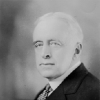
Irving Babbitt
Irving Babbittwas an American academic and literary critic, noted for his founding role in a movement that became known as the New Humanism, a significant influence on literary discussion and conservative thought in the period between 1910 and 1930. He was a cultural critic in the tradition of Matthew Arnold and a consistent opponent of romanticism, as represented by the writings of Jean-Jacques Rousseau. Politically he can, without serious distortion, be called a follower of Aristotle and Edmund Burke. He...
NationalityAmerican
ProfessionCritic
Date of Birth2 August 1865
CountryUnited States of America
The papacy again, representing the traditional unity of European civilization, has also shown itself unable to limit effectively the push of nationalism.
The humanities need to be defended today against the encroachments of physical science, as they once needed to be against the encroachment of theology.
A remarkable feature of the humanitarian movement, on both its sentimental and utilitarian sides, has been its preoccupation with the lot of the masses.
A man needs to look, not down, but up to standards set so much above his ordinary self as to make him feel that he is himself spiritually the underdog.
A person who has sympathy for mankind in the lump, faith in its future progress, and desire to serve the great cause of this progress, should be called not a humanist, but a humanitarian, and his creed may be designated as humanitarianism.
For behind all imperialism is ultimately the imperialistic individual, just as behind all peace is ultimately the peaceful individual.
Commercialism is laying its great greasy paw upon everything including the irresponsible quest of thrills; so that, whatever democracy may be theoretically, one is sometimes tempted to define it practically as standardized and commercialized melodrama.
Anyone who thus looks up has some chance of becoming worthy to be looked up to in turn.
The humanities need to be defended to-day against the encroachments of physical science, as they once needed to be against the encroachment of theology.
A gross and palpable error of the era that is just closing has been the confusion of mechanical and material progress with moral progress.
The humanitarian would, of course, have us meddle in foreign affairs as part of his program of world service.
Act strenuously, would appear to be our faith, and right thinking will take care of itself.
It is well to open one's mind but only as a preliminary to closing it ... for the supreme act of judgment and selection.