Irving Babbitt
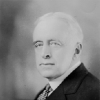
Irving Babbitt
Irving Babbittwas an American academic and literary critic, noted for his founding role in a movement that became known as the New Humanism, a significant influence on literary discussion and conservative thought in the period between 1910 and 1930. He was a cultural critic in the tradition of Matthew Arnold and a consistent opponent of romanticism, as represented by the writings of Jean-Jacques Rousseau. Politically he can, without serious distortion, be called a follower of Aristotle and Edmund Burke. He...
NationalityAmerican
ProfessionCritic
Date of Birth2 August 1865
CountryUnited States of America
An American of the present day reading his Sunday newspaper in a state of lazy collapse is one of the most perfect symbols of the triumph of quantity over quality that the world has yet seen.
The humanitarian lays stress almost solely upon breadth of knowledge and sympathy.
The human mind, if it is to keep its sanity, must maintain the nicest balance between unity and plurality.
Tell him, on the contrary, that he needs, in the interest of his own happiness, to walk in the path of humility and self-control, and he will be indifferent, or even actively resentful.
The industrial revolution has tended to produce everywhere great urban masses that seem to be increasingly careless of ethical standards.
The ultimate binding element in the medieval order was subordination to the divine will and its earthly representatives, notably the pope.
Very few of the early Italian humanists were really humane.
If we are to have such a discipline we must have standards, and to get our standards under existing conditions we must have criticism.
Furthermore, America suffers not only from a lack of standards, but also not infrequently from a confusion or an inversion of standards.
Yet Aristotle's excellence of substance, so far from being associated with the grand style, is associated with something that at times comes perilously near jargon.
Perhaps as good a classification as any of the main types is that of the three lusts distinguished by traditional Christianity - the lust of knowledge, the lust of sensation, and the lust of power.
According to the new ethics, virtue is not restrictive but expansive, a sentiment and even an intoxication.
Since every man desires happiness, it is evidently no small matter whether he conceives of happiness in terms of work or of enjoyment.
We must not, however, be like the leaders of the great romantic revolt who, in their eagerness to get rid of the husk of convention, disregarded also the humane aspiration.