Isaiah Berlin
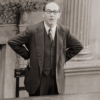
Isaiah Berlin
Sir Isaiah Berlin OM CBE FBAwas a Russian-British social and political theorist, philosopher and historian of ideas. He was an essayist, conversationalist, raconteur, and lecturer. In its obituary of the scholar, the Independent stated that "Isaiah Berlin was often described, especially in his old age, by means of superlatives: the world's greatest talker, the century's most inspired reader, one of the finest minds of our time... there is no doubt that he showed in more than one direction the unexpectedly...
NationalityRussian
ProfessionPhilosopher
Date of Birth6 June 1909
CountryRussian Federation
The history of society is the history of the inventive labors that man alter man, alter his desires, habits, outlook, relationships both to other men and to physical nature, with which man is in perpetual physical and technological metabolism.
One belief, more than any other, is responsible for the slaughter of individuals on the alter of the great historical ideas - justice or progress or happiness of future generations... or emancipation of a nation or race or class... this is the belief that somewhere... there is a final solution.
All forms of tampering with human beings, getting at them, shaping them against their will to your own pattern, all thought control and conditioning is, therefore, a denial of that in men which makes them men and their values ultimate.
If, as I believe, the ends of men are many, and not all of them are in principle compatible with each other, then the possibility of conflict—and of tragedy—can never wholly be eliminated from human life, either personal or social. The necessity of choosing between absolute claims is then an inescapable characteristic of the human condition. This gives its value to freedom as Acton conceived of it—as an end in itself, and not as a temporary need, arising out of our confused notions and irrational and disordered lives, a predicament which a panacea could one day put right
Out of the crooked timber of humanity, nothing completely straight was ever made
There is no a prior reason for supposing that the truth, when it is discovered, will necessarily prove interesting.
To understand is to perceive patterns.
Liberty and equality, spontaneity and security, happiness and knowledge, mercy and justice - all these are ultimate human values, sought for themselves alone; yet when they are incompatible, they cannot all be attained, choices must be made, sometimes tragic losses accepted in the pursuit of some preferred ultimate end.
The first people totalitarians destroy or silence are men of ideas and free minds.
Injustice, poverty, slavery, ignorance - these may be cured by reform or revolution. But men do not live only by fighting evils. They live by positive goals, individual and collective, a vast variety of them, seldom predictable, at times incompatible.
Few things have done more harm than the belief on the part of individuals or groups (or tribes or states or nations or churches) that he or she or they are in sole possession of the truth: especially about how to live, what to be and do - and that those who differ from them are not merely mistaken, but wicked or mad: and need restraining or suppressing.
Freedom for the wolves has often meant death to the sheep.
Those who have ever valued liberty for its own sake believed that to be free to choose, and not to be chosen for, is an unalienable ingredient in what makes human beings human.
But to manipulate men, to propel them toward goals which you-the social reformers-see, but they may not, is to deny their human essence, to treat them as objects without wills of their own, and therefore to degrade them.