Itzhak Perlman
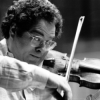
Itzhak Perlman
Itzhak Perlmanis an Israeli-American violinist, conductor, and pedagogue. Over the course of his career, Perlman has performed worldwide, and throughout the United States, in venues that have included a State Dinner at the White House honoring Queen Elizabeth II, and a Presidential Inauguration, and he has conducted the Detroit Symphony Orchestra, and the Westchester Philharmonic. In 2015, he was awarded the Presidential Medal of Freedom...
NationalityIsraeli
ProfessionViolinist
Date of Birth31 August 1945
CityTel Aviv, Israel
CountryIsrael
I couldn't only do one thing--I don't want the personal hell of oneness.
He was a giant in this century, as a violinist, musician, personality within the musical world. He was a real singular, individual human being, charismatic, and of course the most phenomenal child prodigy that ever existed, certainly in this century.
You get more nervous in front of a lot of people. That's why, when you play a concerto, you play with a small orchestra, in some place where you don't feel that it is as important as Carnegie Hall.
I'm now doing three things: concerts, conducting, and teaching, and they each support each other. I learn to see things from different perspectives and listen with different ears. The most important thing that you need to do is really listen.
So many things can drive you mad as a child, not only music.
That makes classical music work, the ability to improvise.
The thing is that what you try to do when you play is you try to play not below a certain level. In other words, it can be a special day where it would be phenomenal, but if it's not below a certain level, that's the goal. You know, that's what you want to do. That's why you practice and so on.
I do three things. I do teaching, I do conducting and I do playing. And each one of those sort of helps the other.
Sometimes you get from the mouth of kids wonderful things.
Preparing for a future in music is an expensive proposition.
Another thing that I don't like to do is show too much how it goes. I do it once in a blue moon. Sometimes there are lessons when I don't pick up a violin at all.
When you play a concerto with a small orchestra, you don't feel it is as important as Carnegie Hall. You try to work out all the little problems. Once that's all done, trust comes in.
I'm just a one-instrument player. I have been known to play a blender, but I basically play - just play the violin.
For people who are really talented, what you don't say becomes extremely important. You have to judge what to say and what to leave alone so you can let the talent develop.