Itzhak Perlman
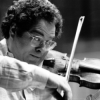
Itzhak Perlman
Itzhak Perlmanis an Israeli-American violinist, conductor, and pedagogue. Over the course of his career, Perlman has performed worldwide, and throughout the United States, in venues that have included a State Dinner at the White House honoring Queen Elizabeth II, and a Presidential Inauguration, and he has conducted the Detroit Symphony Orchestra, and the Westchester Philharmonic. In 2015, he was awarded the Presidential Medal of Freedom...
NationalityIsraeli
ProfessionViolinist
Date of Birth31 August 1945
CityTel Aviv, Israel
CountryIsrael
... Beethoven concertos ... Tchaicovsky concertos ... with a lot of these wonderful masterpieces there's always something wonderful to find ... there's always something new to find ...
I don't feel that the conductor has real power. The orchestra has the power, and every member of it knows instantaneously if you're just beating time.
Ask many of us who are disabled what we would like in life and you would be surprised how few would say, 'Not to be disabled.' We accept our limitations.
Child prodigy is a curse because you've got all those terrible possibilities.
You decide to be a musician, you have to put in the time.
This young wine may have a lot of tannins now, but in five or 10 years it is going to be spectacular, despite the fact that right now it tastes like crude oil. You know this is how it is supposed to taste at this stage of development.
The Violin of my dreams. If you wanna play a pianissimo that is almost inaudible and yet it carries through a hall that seats 3,000 people, there's your Strad.
I can actually see the sound in my head. I can actually see it... But each sound is different so this one has that sparkle, there is a sparkle to the sound.
Nothing is better for my playing than teaching because when you teach, you have to think and you have to listen what other people do. And then all of a sudden, you play yourself and then you say, my goodness, I don't need a teacher. I'm my own teacher. Then I can react to what I'm doing immediately. It really improves.
I always consider myself lucky that I can actually cry listening to some music.
Perhaps our task in this shaky, fast-changing, bewildering world in which we live is to make music, at first with all that we have, and then, when that is no longer possible, to make music with what we have left.
Sometimes it is the artist's task to find out how much music you can still make with what you have left.
One must always practice slowly. If you learn something slowly, you forget it slowly.
One of the most important elements in teaching, conducting, and performing, all three, is listening.