Ivan Pavlov
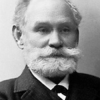
Ivan Pavlov
Ivan Petrovich Pavlov; 26 September 1849 – 27 February 1936) was a Russian physiologist known primarily for his work in classical conditioning. From his childhood days Pavlov demonstrated intellectual brilliance along with an unusual energy which he named "the instinct for research". Inspired by the progressive ideas which D. I. Pisarev, the most eminent of the Russian literary critics of the 1860s, and I. M. Sechenov, the father of Russian physiology, were spreading, Pavlov abandoned his religious career and devoted his life...
NationalityRussian
ProfessionScientist
Date of Birth14 September 1849
CityRyazan, Russia
CountryRussian Federation
While you are experimenting, do not remain content with the surface of things. Don't become a mere recorder of facts, but try to penetrate the mystery of their origin.
With each meal, when edible substances find their way into the oral cavity, thick and viscous saliva containing much mucus flows out of these glands.
Our experiments not only proved the existence of a nervous apparatus in the above-mentioned glands, but also disclosed some facts clearly showing the participation of these nerves in normal activity.
Only by observing this condition would the results of our work be regarded as fully conclusive and as having elucidated the normal course of the phenomena.
Thus, the purposeful relationship of phenomena is based on the specificity of the stimuli, that correspond to similarly specific reactions.
Facts are the air of the scientists. Without them you never can fly.
Precise knowledge of what happens to the food entering the organism must be the subject of ideal physiology, the physiology of the future.
So the stimulation effected by the act of eating reaches the gastric glands by means of the nerve fibres that are contained in the vagus nerves.
In the case of the stomach, however, the nerves of the glandular cells were always severed when constructing an artificially isolated pouch and this, naturally, affected the normal work of the stomach.
The digestive canal is in its task a complete chemical factory. The raw material passes through a long series of institutions in which it is subjected to certain mechanical and, mainly, chemical processing, and then, through innumerable side-streets, it is brought into the depot of the body. Aside from this basic series of institutions, along which the raw material moves, there is a series of lateral chemical manufactories, which prepare certain reagents for the appropriate processing of the raw material.
As was to be expected, the discovery of the nervous apparatus of the salivary glands immediately impelled physiologists to seek a similar apparatus in other glands lying deeper in the digestive canal.
Finally, as the digestive canal is a complex system, a series of separate chemical laboratories, I cut the connections between them in order to investigate the course of phenomena in each particular laboratory; thus I resolved the digestive canal into several separate parts.
Do not become archivists of facts. Try to penetrate to the secret of their occurrence, persistently search for the laws which govern them.
The gastric laboratory uses its protein ferment under an acid reaction.