Jack Kilby
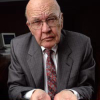
Jack Kilby
Jack St. Clair Kilbywas an American electrical engineer who took partin the realization of the first integrated circuit while working at Texas Instrumentsin 1958. He was awarded the Nobel Prize in physics on December 10, 2000. To congratulate him, US President Bill Clinton wrote, "You can take pride in the knowledge that your work will help to improve lives for generations to come."...
NationalityAmerican
ProfessionScientist
Date of Birth8 November 1923
CityJefferson City, MO
CountryUnited States of America
Well, the big products in electronics in the '50s were radio and television. The first big computers were just beginning to come in and represented the most logical market for us to work in.
It's true that the original idea was mine, but what you see today is the work of probably tens of thousands of the world's best engineers, all concentrating on improving the product, reducing the cost, things of that sort.
Well, it's very dangerous to project, but it's clear that the existing technology has some more years to go.
I think I thought it would be important for electronics as we knew it then, but that was a much simpler business and electronics was mostly radio and television and the first computers.
My own interest developed because I thought it was a fascinating subject and something I wanted to pursue.
Well, the thought that everybody might have a personal computer at their desk or their home was certainly not on the mainstream of anybody's activity at that time.
Today, people tend to credit me with having the original idea and made the first circuits.
Somewhere in that 20-year period, I would assume that there will be some basically new approach that will begin to cut into it, but it's got a long time.
Five years ago, people were crying and feeling the Japanese were about to take over the Earth. I don't hear that kind of talk anymore.
They're very strong in memory. Didn't do very much in microprocessors or digital signal processing.
There was a space program before there was integrated circuits.
Space was of interest, but a major driving factor was the interest in the military, which had much broader, more diverse needs, more urgency with it.
This could be done in part, because the equipment was very inexpensive. Not much money was involved in tooling so that basic changes of that type could be accomplished.
How are we doing in the electronics field as opposed to, you know, we hear how advanced the Japanese are? Do you think we're still pretty competitive? Oh, yes.