Jacob Bronowski
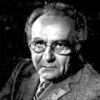
Jacob Bronowski
Jacob Bronowskiwas a British mathematician, historian of science, theatre author, poet and inventor. Of Polish-Jewish origin, he is best remembered as the presenter and writer of the 1973 BBC television documentary series, The Ascent of Man, and the accompanying book...
NationalityEnglish
ProfessionScientist
Date of Birth1 September 1908
kings powerful hero
The most powerful drive in the ascent of man is his pleasure in his own skill. He loves to do what he does well and, having done it well, he loves to do it better. You see it in his science. You see it in the magnificence with which he carves and builds, the loving care, the gaiety, the effrontery. The monuments are supposed to commemorate kings and religions, heroes, dogmas, but in the end the man they commemorate is the builder.
order ideas creative
There are three creative ideas which, each in its turn, have been central to science. They are the idea of order, the idea of causes, and the idea of chance.
betrayal philosophy war
There are two parts to the human dilemma. One is the belief that the end justifies the means. That push-button philosophy, that deliberate deafness to suffering, has become the monster in the war machine. The other is the betrayal of the human spirit: the assertion of dogma that closes the mind, and turns a nation, a civilization, into a regiment of ghosts--obedient ghosts or tortured ghosts.
men imagination mind
To imagine is the characteristic act, not of the poet's mind, or the painter's, or the scientist's, but of the mind of man.
art discovery missing
We re-make nature by the act of discovery, in the poem or in the theorem. And the great poem and the deep theorem are new to every reader, and yet are his own experiences, because he himself re-creates them. They are the marks of unity in variety; and in the instant when the mind seizes this for itself, in art or in science, the heart misses a beat.
men self way
The men who made the Industrial Revolution are usually pictured as hardfaced businessmen with no other motive than self-interest. That is certainly wrong. For one thing, many of them were inventors who had come into business that way.
men doors satire
Satire is not a social dynamite. But it is a social indicator: it shows that new men are knocking at the door.
latin integrity mean
We are a scientific civilization. That means a civilization in which knowledge and its integrity are crucial. Science is only a Latin word for knowledge ... Knowledge is our destiny.
science errors ascent
Every judgment in science stands on the edge of error, and is personal.
sex men algae
Sex was invented as a biological instrument by (say) the green algae. But as an instrument in the ascent of man which is basic to his cultural evolution, it was invented by man himself.
running simple ideas
The idea that the universe is running down comes from a simple observation about machines. Every machine consumes more energy than it renders.
sex ignorance race
By the worldly standards of public life, all scholars in their work are of course oddly virtuous. They do not make wild claims, they do not cheat, they do not try to persuade at any cost, they appeal neither to prejudice nor to authority, they are often frank about their ignorance, their disputes are fairly decorous, they do not confuse what is being argued with race, politics, sex or age, they listen patiently to the young and to the old who both know everything. These are the general virtues of scholarship, and they are peculiarly the virtues of science.
science men talking
It doesn't matter whether you're talking about bombs or the intelligence quotients of one race as against another if a man is a scientist, like me, he'll always say Publish and be damned.
respect men environment
Nature has not fitted man to any specific environment.