James A. Garfield
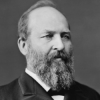
James A. Garfield
James Abram Garfieldwas the 20th President of the United States, serving from March 4, 1881, until his assassination later that year. Garfield had served nine terms in the House of Representatives, and had been elected to the Senate before his candidacy for the White House, though he declined the senatorship once he was president-elect. He is the only sitting House member to be elected president...
NationalityAmerican
ProfessionPresident
Date of Birth19 November 1831
CountryUnited States of America
The prosperity which now prevails is without parallel in our history. Fruitful seasons have done much to secure it, but they have not done all. The preservation of the public credit and the resumption of specie payments, so successfully attained by the Administration of my predecessors, have enabled our people to secure the blessings which the seasons brought.
The refunding of the national debt at a lower rate of interest should be accomplished without compelling the withdrawal of the national-bank notes, and thus disturbing the business of the country.
The possession of great powers no doubt carries with it a comtempt for mere external show
Swift defined observation to be an old man's memory.
Commerce links all mankind in one common brotherhood of mutual dependence and interests.
Tortured for the Republic.
Great ideas travel slowly, and for a time noiselessly, as the gods whose feet were shod with wool.
The people are responsible for the character of their Congress.
I admitted, that the world had existed millions of years. I am astonished at the ignorance of the masses on these subjects. Hugh Miller has it right when he says that 'the battle of evidences must now be fought on the field of the natural sciences.'
[Science] is the literature of God written on the stars-the trees-the rocks-and more important because [of] its marked utilitarian character.
Liberty is no negation. It is a substantive, tangible reality.
They grow stiff in the joints. They get in a rut. They go to seed.
Most human organizations that fall short of their goals do so not because of stupidity or faulty doctrines, but because of internal decay and rigidification.
I love to deal with doctrines and events. The contests of men about men I greatly dislike.