James Hutton
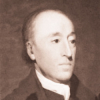
James Hutton
James Hutton FRSE– 26 March 1797) was a Scottish geologist, physician, chemical manufacturer, naturalist, and experimental agriculturalist. He originated the theory of uniformitarianism—a fundamental principle of geology—which explains the features of the Earth's crust by means of natural processes over geologic time. Hutton's work established geology as a proper science, and thus he is often referred to as the "Father of Modern Geology"...
NationalityScottish
ProfessionScientist
Date of Birth3 June 1726
enquiry results ends
The result, therefore, of this physical enquiry is that we find no vestige of a beginning, no prospect of an end.
mean land world
As there is not in human observation proper means for measuring the waste of land upon the globe, it is hence inferred, that we cannot estimate the duration of what we see at present, nor calculate the period at which it had begun; so that, with respect to human observation, this world has neither a beginning nor an end.
What more can we require? Nothing but time.
inspirational life inspirational-life
There is no vestige of a beginning, no prospect of an end.
moving mean rocks
A rock or stone is not a subject that, of itself, may interest a philosopher to study; but, when he comes to see the necessity of those hard bodies, in the constitution of this earth, or for the permanency of the land on which we dwell, and when he finds that there are means wisely provided for the renovation of this necessary decaying part, as well as that of every other, he then, with pleasure, contemplates this manifestation of design, and thus connects the mineral system of this earth with that by which the heavenly bodies are made to move perpetually in their orbits.
past principles action
The past history of our globe must be explained by what can be seen to be happening now. No powers are to be employed that are not natural to the globe, no action to be admitted except those of which we know the principle.