James Madison
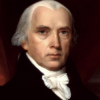
James Madison
James Madison, Jr.was a political theorist, American statesman, and the fourth President of the United States. He is hailed as the "Father of the Constitution" for his pivotal role in drafting and promoting the U.S. Constitution and the Bill of Rights...
NationalityAmerican
ProfessionUS President
Date of Birth16 March 1751
CityPort Conway, VA
CountryUnited States of America
growing-up fall class
[T]he most common and durable source of factions has been the various and unequal distribution of property. Those who hold and those who are without property have ever formed distinct interests in society. Those who are creditors, and those who are debtors, fall under a like discrimination. A landed interest, a manufacturing interest, a mercantile interest, a moneyed interest, with many lesser interests, grow up of necessity in civilized nations, and divide them into different classes, actuated by different sentiments and views.
government views two
THE Constitution proposed by the convention may be considered under two general points of view. The FIRST relates to the sum or quantity of power which it vests in the government, including the restraints imposed on the States. The SECOND, to the particular structure of the government, and the distribution of this power among its branches.
fall ideas two
It may not be improper, however, to remark two consequences, evidently flowing from an extension of the federal power to every subject falling within the idea of the "general welfare." One consequence must be, to enlarge the sphere of discretion allotted to the executive magistrate... The other consequence would be, that of an excessive augmentation of the offices, honors, and emoluments, depending on the executive will.
light misunderstood doe
The best reason to be assigned, in this case, for not having made the Constitution more free from a charge of uncertainty in its meaning, is believed to be, that it was not suspected that any such charge would ever take place; and it appears that no such charge did take place, during the early period of the Constitution, when the meaning of its authors could be best ascertained, nor until many of the contemporary lights had in the lapse of time been extinguished. How often does it happen, that a notoriety of intention diminishes the caution against its being misunderstood or doubted!
want conventions constitutional-convention
It would have marked a want of foresight in the convention, which our own experience would have rendered inexcusable.
art president constitution-of-the-united-states
Whilst the last members were signing it Doctr. Franklin looking towards the Presidents chair, at the back of which a rising sun happened to be painted, observed to a few members near him, that Painters had found it difficult to distinguish in their art a rising from a setting sun.
citizens might administration
I have appealed to our own experience for the truth of what I advance on this subject [that the legislative power is the predominant power]. Were it necessary to verify this experience by particular proofs, they might be multiplied without end. I might find a witness in every citizen who has shared in, or been attentive to, the course of public administrations.
too-much reason states
For the same reason that the members of the State legislatures will be unlikely to attach themselves sufficiently to national objects, the members of the federal legislature will be likely to attach themselves too much to local objects.
war justice humanity
As the war was just in its origin and necessary and noble in its objects, we can reflect with a proud satisfaction that in carrying it on no principle of justice or honor, no usage of civilized nations, no precept of courtesy or humanity, have been infringed.
spirit states congress
A local spirit will infallibly prevail much more in the members of Congress than a national spirit will prevail in the legislatures of the particular States.
character passion order
[Regarding legislative assemblies,] the number ought at most to be kept within a certain limit, in order to avoid the confusion and intemperance of a multitude. In all very numerous assemblies, of whatever characters composed, passion never fails to wrest the scepter from reason. Had every Athenian citizen been a Socrates, every Athenian assembly would still have been a mob.
law giving unions
there ought always to be a constitutional method of giving efficacy to constitutional provisions. What for instance would avail restrictions on the authority of the state legislatures, without some constitutional mode of enforcing the observance of them? . . . This power must either be a direct negative on the state laws, or an authority in the federal courts, to over-rule such as might be in manifest contravention of the articles of union.
character law finals
[R]efusing or not refusing to execute a law to stamp it with its final character . . . makes the Judiciary department paramount in fact to the Legislature, which was never intended and can never be proper.
voice people democracy
It may well happen that the public voice, pronounced by the representatives of the people, will be more constant to the public good than if pronounced by the people themselves.