James Monroe
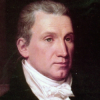
James Monroe
James Monroewas the fifth President of the United States, serving between 1817 and 1825. Monroe was the last president who was a Founding Father of the United States and the last president from the Virginian dynasty and the Republican Generation. Born in Westmoreland County, Virginia, Monroe was of the planter class and fought in the American Revolutionary War. He was wounded in the Battle of Trenton with a musket ball to his shoulder. After studying law under Thomas Jefferson from...
NationalityAmerican
ProfessionUS President
Date of Birth28 April 1758
CountryUnited States of America
The American continents, by the free and independent condition by which they have assumed and maintained, are henceforth not to be considered as subjects for future colonization by any European powers.
There is every reason to believe that our system will soon attain the highest degree of perfection of which human institutions are capable.
In wars of the European powers in matters relating to themselves we have never taken any part, nor does it comport with our policy so to do
The citizens of the United States cherish sentiments the most friendly in favor of liberty and happiness...beyond the Atlantic. In the wars of the European powers in matters relating to themselves we have never taken any part, nor does it comport with our policy to do so. It is only when our rights are invaded or seriously menaced that we resent injuries...
Our relations with the other powers of Europe have experienced no essential change since the last session.
The civil war which has so long prevailed between Spain and the Provinces in South America still continues, without any prospect of its speedy termination.
I have great satisfaction in stating that our relations with France, Russia, and other powers continue on the most friendly basis.
To impose taxes when the public exigencies require them is an obligation of the most sacred character, especially with a free people.
Of the liberty of conscience in matters of religious faith, of speech and of the press; of the trial by jury of the vicinage in civil and criminal cases; of the benefit of the writ of habeas corpus; of the right to keep and bear arms.... If these rights are well defined, and secured against encroachment, it is impossible that government should ever degenerate into tyranny.
The movements of a great nation are connected in all their parts. If errors have been committed they ought to be corrected; if the policy is sound it ought to be supported.
During the darkest days of the Revolutionary War, the Continental Congress and George Washington - I call him the first George W. - (laughter and applause) - urged citizens to pray and to give thanks and to ask for God's protection.
I regret that I should leave this world without again beholding him.
[In a republic,] it is not the people themselves who make the decisions, but the people they themselves choose to stand in their places.
Before any man can be considered as a member of civil society, he must be considered as a subject of the Governor of the Universe. And to the same Divine Author of every good and perfect gift we are indebted for all those privileges and advantages, religious as well as civil, which are so richly enjoyed in this favored land.