James Whistler
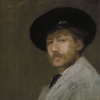
James Whistler
James Abbott McNeill Whistlerwas an American artist, active during the American Gilded Age and based primarily in the United Kingdom. He was averse to sentimentality and moral allusion in painting, and was a leading proponent of the credo "art for art's sake". His famous signature for his paintings was in the shape of a stylized butterfly possessing a long stinger for a tail. The symbol was apt, for it combined both aspects of his personality—his art was characterized by a...
NationalityAmerican
ProfessionPainter
Date of Birth11 July 1834
CountryUnited States of America
Art happens-no hovel is safe from it, no prince may depend upon it, the vastest intelligence cannot bring it about.
Art is limited to the infinite, and beginning there cannot progress.
The masterpiece should appear as the flower to the painter - perfect in its bud as in its bloom - with no reason to explain its presence - no mission to fulfill - a joy to the artist, a delusion to the philanthropist - a puzzle to the botanist - an accident of sentiment and alliteration to the literary man.
People will forgive anything but beauty and talent. So I am doubly unpardonable.
Nature is usually wrong.
The explanation is quite simple. I wished to be near my mother.
I am not arguing with you - I am telling you.
The work of a master reeks not of the sweat of the brow - suggests no effort - and is finished from its beginning.
A student of James McNeill Whistler tells the great artist, 'I tend to paint what I see.' Whistler replies, 'Ah! The shock will come when you see what you paint!
Industry in art is a necessity - not a virtue - and any evidence of the same, in the production, is a blemish, not a quality; a proof, not of achievement, but of absolutely insufficient work, for work alone will efface the footsteps of work.
Nature is very rarely right, to such an extent even, that it might almost be said that nature is usually wrong...
If silicon had been a gas I should have been a major-general.
It is for the artist... in portrait painting to put on canvas something more than the face the model wears for that one day; to paint the man, in short, as well as his features.
I remember that at one time I always made a drawing before going to bed!! - Of myself I mean - though I finally destroyed most of them.