Janet Yellen
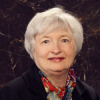
Janet Yellen
Janet Louise Yellenis an American economist. She is the Chair of the Board of Governors of the Federal Reserve System, previously serving as Vice Chair from 2010 to 2014. Previously, she was President and Chief Executive Officer of the Federal Reserve Bank of San Francisco; Chair of the White House Council of Economic Advisers under President Bill Clinton; and business professor at the University of California, Berkeley, Haas School of Business...
NationalityAmerican
ProfessionPolitician
Date of Birth13 August 1946
CityNew York City, NY
CountryUnited States of America
I wouldn't be surprised to see core PCE inflation actually fall a bit over the next two years
Those of you who lived through the 1970s will remember that higher oil prices touched off a wage-price spiral that pushed inflation into double-digit territory.
Those of you who lived through the 1970's will remember that higher oil prices touched off a wage-price spiral that pushed inflation into double-digit territory,
Uncertainty about sales impedes business planning and could harm capital formation just as much as uncertainty about inflation can create uncertainty about relative prices and harm business planning.
Models used to describe and predict inflation commonly distinguish between changes in food and energy prices - which enter into total inflation - and movements in the prices of other goods and services - that is, core inflation.
A credible inflation objective could...enhance the flexibility of monetary policy to respond to the real effects of adverse shocks.
I'm just opposed to a pure inflation-only mandate in which the only thing a central bank cares about is inflation and not employment.
Higher oil prices may be partly passed through to core inflation at least for a time,
I view decisions about the stance of policy going forward as quite data-dependent. On the one hand, I will be alert to any incoming data suggesting that economic growth is less likely to slow to a sustainable pace or that inflation is less likely to remain contained.
Food and energy account for a significant portion of household budgets, so the Federal Reserve's inflation objective is defined in terms of the overall change in consumer prices.
I support the idea of a quantitative objective for price stability.
We do need to be careful about overshooting.
While admirers of capitalism, we also to a certain extent believe it has limitations that require government intervention in markets to make them work.
Transparency concerning the Federal Reserve's conduct of monetary policy is desirable because better public understanding enhances the effectiveness of policy. More important, however, is that transparent communications reflect the Federal Reserve's commitment to accountability within our democratic system of government.