Janis Karpinski
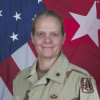
Janis Karpinski
Janis Leigh Karpinskiis a career officer in the US Army Reserve, now retired. She is notable for having commanded the forces that operated Abu Ghraib and other prisons in Iraq in 2003 and 2004, at the time of the scandal related to torture and prisoner abuse. She commanded three prisons in Iraq, and the forces that ran them. Her education includes a Bachelor of Arts degree in English and secondary education from Kean College, a Master of Arts degree in...
NationalityAmerican
ProfessionSoldier
Date of Birth25 May 1953
CountryUnited States of America
Iraq was a huge country, and when you have people largely saying now, 'He may have been a dictator, but we were better under Saddam,' this Administration needs to take notice. And at some point you have to say, 'Stop the train, because it's completely derailed. How do we fix it?' But in an effort to do that, you have to admit that you made a few mistakes, and this Administration is not willing to admit any mistakes whatsoever.
How could (the military) hold me accountable when I had no direct access? ... How come they didn't hold Rumsfeld accountable. How is that possible?
I joined the 800th MP Brigade when they were already deployed.
There was a military police brigade with over 3,400 soldiers getting ready to go home because their mission - prisoner-of-war operations - was finished.
The war was declared over - the end of major combat operations - in May 2003. Release procedures got under way immediately; reducing the population from 8,000 to just over 300, of course, requires fewer military police soldiers.
The vast majority of prisoners at Abu Ghraib, even after interrogation, had no further intel value whatsoever.
They can do whatever they want. They can make it appear anything they want, ... I will not be silenced. I will continue to ask how they can continue to blame seven rogue soldiers on the night shift when there is a preponderance of information - hard information - from a variety of sources that says otherwise.
The findings in the report have been largely discredited because he was not an impartial party and because so much more information has come out.
The day after the prison was transferred to the military intelligence command, they had an entire battalion - 1,200, 1,500 soldiers - arrive at Abu Ghraib just for force protection alone.
And shortly after that, when I try to get access to those soldiers, to ask them what in the world was going on, I was told that they did not work for me and I had no right to have access to any one of them.
If you hold thousands of prisoners, you have to feed them, clothe them, care for them, provide medical attention - and there were no provisions.
After they killed Uday and Qusay, the focus centered on Saddam: Find him, kill him, capture him, whatever it takes. To me, it was a false sense of security: If we get Saddam, we're going to win this war.
It's hard to be happy when you are facing 120 to 140 degree temperatures and nothing seems to be moving in a direction that you think or they think or you've been told it's supposed to be moving in.