Joan Baez
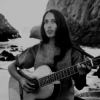
Joan Baez
Joan Baezis an American folk singer, songwriter, musician, and activist whose contemporary folk music often includes songs of protest or social justice. Baez has performed publicly for over 55 years, releasing over 30 albums. Fluent in Spanish as well as in English, she has also recorded songs in at least six other languages. She is regarded as a folk singer, although her music has diversified since the counterculture days of the 1960s and now encompasses everything from folk rock and...
NationalityAmerican
ProfessionMusician
Date of Birth9 January 1941
CountryUnited States of America
If you're gonna sing meaningful songs, you have to be committed to living a life that backs that up.
The only thing that's been a worse flop than the organization of nonviolence has been the organization of violence.
As long as we keep searching, the answers come.
Sometimes I think that it is enough to say that if we don't sit down and shut up once in a while we'll lose our minds even earlier than we had expected. Noise is an imposition on sanity, and we live in very noisy times.
I've been obsessed with stopping people from blowing each other's brains out since I was ten.
I was trying to disturb the war.
To love means you also trust.
The foundation of my beliefs is the same as it was when I was 10. Non-violence.
Put tattoos all up and down our thighs, do anything our parents would despise. Take uppers, downers, blues, and reds and yellows, our brains are turning into jello.
The hardest song to write is a protest song, a topical song with meaning.
Noise is an imposition on sanity, and we live in very noisy times.
Back then I was still listening to rhythm and blues, and my aunt took me to see a Pete Seeger concert. And it gelled. He made all the sense in the world to me. I got addicted to his albums, and then Belafonte and Odetta - they were the people who seemed to fuse things that were important to me into music. I think Pete the most because he did what he did to the point where he took those enormous risks and then paid for them.
That was sheer luck that it [being immersed into folk scene] happened when my voice began to develop. I don't know exactly what would have happened if I hadn't been alive and well and really lively in the Cambridge scene. But (the folk scene) was, and I fell into it absolutely naturally in the little coffee shops, and pretty soon it was Newport and then it was an overwhelming response internationally, actually.
I didn't study anything really. I didn't learn out of the books because I couldn't read music very well, so it is what they say it is - you learn from other people. And my cohorts and I would sneak around the coffee shops and hear stuff we wanted to learn, and then you ask whoever was playing it to teach you.