John C. Calhoun
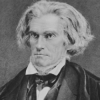
John C. Calhoun
John Caldwell Calhounwas an American statesman and political theorist from South Carolina, who is best remembered for his strong defense of slavery and for advancing the concept of minority rights in politics, which he did in the context of defending Southern values from perceived Northern threats. He began his political career as a nationalist, modernizer, and proponent of a strong national government and protective tariffs. By the late 1820s, his views reversed and he became a leading proponent of states'...
NationalityAmerican
ProfessionStatesman
Date of Birth18 March 1782
CountryUnited States of America
I take higher ground. I hold that in the present state of civilization, where two races of different origin, and distinguished by color, and other physical differences, as well as intellectual, are brought together, the relation now existing in the slaveholding States between the two, is, instead of an evil, a good—a positive good. . . . I hold then, that there never has yet existed a wealthy and civilized society in which one portion of the community did not, in point of fact, live on the labor of the other.
Of all earthly blessings, I place Liberty in the first rank, and of course, consider the obligation to defend and preserve it, as the most sacred of all our civil and social duties... It is not in the power of any single, or few individuals to preserve liberty. It can only be effected by the people themselves; by their intelligence, virtue, courage, and patriotism.
Government has no right to control individual liberty beyond what is necessary to the safety and well-being of society. Such is the boundary which separates the power of the government and the liberty of the citizen or subject in the political state.
There never has yet existed a wealthy and civilized society in which one portion of the community did not, in point of fact, live on the labor of the other.
Stripped of all its covering, the naked question is, whether ours is a federal or consolidated government; a constitutional or absolute one; a government resting solidly on the basis of the sovereignty of the States, or on the unrestrained will of a majority; a form of government, as in all other unlimited ones, in which injustice, violence, and force must ultimately prevail.
Irresponsible power is inconsistent with liberty, and must corrupt those who exercise it.
War may make us great, but let it never be forgotten that peace only can make us both great and free.
Peace is, indeed, our policy. A kind Providence has cast our lot on a portion of the globe sufficiently vast to satisfy the most grasping ambition, and abounding in resources beyond all others, which only require to be fully developed to make us the greatest and most prosperous people on earth.
Were there no contrariety of interests, nothing would be more simple and easy than to form and preserve free institutions. The right of suffrage alone would be a sufficient guarantee. It is the conflict of opposing interests which renders it the most difficult work of man.
What we want, above all things on earth in our public men, is independence. It is one great defect in the character of the public men of America that there is that real want of independence; and, in this respect, a most marked contrast exists between public men in this country and in Great Britain.
We are as good judges of our interest and safety, and the means of preserving them, as the non-slaveholding States are of theirs, and rather better than they can be of ours.
So long as the Oregon question is left open, Mexico will calculate the chances of a rupture between us and Great Britain, in the event of which she would be prepared to make common cause against us. But when an end is put to any such hope, she will speedily settle her difference with us.
I never know what South Carolina thinks of a measure. I never consult her. I act to the best of my judgment, and according to my conscience. If she approves, well and good. If she does not, or wishes any one to take my place, I am ready to vacate. We are even.
I am not one of those who believe that we are bound to vote supplies to cover a deficiency in the treasury whenever called on, without investigating the causes which occasioned it.