John Dewey
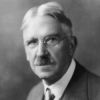
John Dewey
John Deweywas an American philosopher, psychologist, and educational reformer whose ideas have been influential in education and social reform. Dewey is one of the primary figures associated with the philosophy of pragmatism and is considered one of the founders of functional psychology. A Review of General Psychology survey, published in 2002, ranked Dewey as the 93rd most cited psychologist of the 20th century. A well-known public intellectual, he was also a major voice of progressive education and liberalism. Although Dewey...
communication party common
Communication is a process of sharing experience till it becomes a common possession. It modifies the disposition of both the parties who partake in it.
educational struggle school
Various epochs of the past have had their own characteristic struggles and interests. Each of these great epochs has left behind itself a kind of cultural deposit, like a geologic stratum. These deposits have found their way into educational institutions in the form of studies, distinct courses of study, distinct types of schools.
art development facts
To feel the meaning of what one is doing, and to rejoice in that meaning; to unite in one concurrent fact the unfolding of the inner life and the ordered development of material conditions--that is art.
children views parent
Each generation is inclined to educate its young so as to get along in the present world instead of with a view to the proper end of education: the promotion of the best possible realization of humanity as humanity. Parents educate their children so that they may get on; princes educate their subjects as instruments of their own purpose.
men mind care
The first step in freeing men from external chains was to emancipate them from the internal chains of false beliefs and ideals. To free one's mind of chains is to free it of the care of what is acceptable or viewed so by society, this is when true freedom is discovered.
plato mean taught-us
But progress in knowledge has made us aware of the superficiality of Plato's lumping of individuals and their original powers into a few sharply marked-off classes; it has taught us that original capacities are indefinitely numerous and variable. It is but the other side of this fact to say that in the degree in which society has become democratic, social organization means utilization of the specific and variable qualities of individuals, not stratification by classes.
past discipline effort
Every serious-minded person knows that a large part of the effort required in moral discipline consists in the courage needed to acknowledge the unpleasant consequences of one's past and present acts.
lying immature quality
That the ulterior significance of every mode of human association lies in the contribution which it makes to the improvement of the quality of experience is a fact most easily recognized in dealing with the immature.
reality inspire action
The future of religion is connected with the possibility of developing a faith in the possibilities of human experience and human relationships that will create a vital sense of the solidarity of human interests and inspire action to make that sense a reality.
study notion fallacy
Perhaps the greatest of all pedagogical fallacies is the notion that a person learns only the particular thing he is studying at the time.
kings office letters
In England, philosophers are honoured, respected; they rise to public offices, they are buried with the kings... In France warrants are issued against them, they are persecuted, pelted with pastoral letters: Do we see that England is any the worse for it?
lying thinking reflection
In general it may be said that the things which we take for granted without inquiry or reflection are just the things which determine our conscious thinking and decide our conclusions. And these habitudes which lie below the level of reflection are just those which have been formed in the constant give and take of relationship with others.
important desire human-nature
The deepest urge in human nature is the desire to feel important.
reflection ideas imagination
An idea is a method of evading, circumventing or surmounting through reflection, obstacles that otherwise would have to be attacked by brute force.