John Gresham Machen
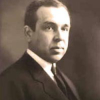
John Gresham Machen
John Gresham Machenwas an American Presbyterian theologian in the early 20th century. He was the Professor of New Testament at Princeton Seminary between 1906 and 1929, and led a conservative revolt against modernist theology at Princeton and formed Westminster Theological Seminary as a more orthodox alternative. As the Northern Presbyterian Church continued to reject conservative attempts to enforce faithfulness to the Westminster Confession, Machen led a small group of conservatives out of the church to form the Orthodox Presbyterian Church...
NationalityAmerican
ProfessionTheologian
Date of Birth28 July 1881
CountryUnited States of America
And God grant that His fire be not quenched! God save us from any smoothing over of these questions in the interests of a hollow pleasantness; God grant that great questions of principle may never rest until they are stettled right! It is out of such times of questioning that great revivals come. God grant that it may be so today! Controversy of the right sort is good; for out of such controversy, as Church history and Scripture alike teach, there comes the salvation of souls.
Indifferentism about doctrine makes no heroes of the faith.
The Christian cannot be satisfied so long as any human activity is either opposed to Christianity or out of connection with Christianity. Christianity must pervade not merely all nations but also all of human thought.
Afternoon classes - that evil invention!
Christ died"--that is history; "Christ died for our sins"--that is doctrine. Without these two elements, joined in an absolutely indissoluble union, there is no Christianity.
The more we know of God, the more unreservedly we will trust him; the greater our progress in theology, the simpler and more child-like will be our faith
I can see little consistency in a type of Christian activity which preaches the gospel on the street corners and at the ends of earth, but neglects the children of the covenant by abandoning them to a cold and unbelieving secularism.
Paganism is that view of life which finds the highest goal of human existence in the healthy and harmonious and joyous development of existing human faculties. Very different is the Christian ideal. Paganism is optimistic with regard to unaided human nature, whereas Christianity is the religion of the broken heart.
Modern culture is a mighty force. It is either subservient to the gospel or else it is the deadliest enemy of the gospel
After listening to modern tirades against the great creeds of the Church, one receives a shock when one turns to the Westminster Confession... and discovers that in doing so one has turned from shallow modern phrases to a "dead orthodoxy" that is pulsating with life in every word. In such orthodoxy there is life enough to set the whole world aglow with Christian love.
What is today a matter of academic speculation begins tomorrow to move armies and pull down empires.
Place the lives of children in their formative years, despite the convictions of their parents, under the intimate control of experts appointed by the state, force them to attend schools where the higher aspirations of humanity are crushed out, and where the mind is filled with the materialism of the day, and it is difficult to see how even the remnants of liberty can subsist.
Christianity is not engrossed by this transitory world, but measures all things by the thought of eternity.
It is impossible to be a true soldier of Jesus Christ and not fight.