John Maynard Keynes
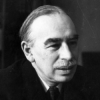
John Maynard Keynes
John Maynard Keynes, 1st Baron Keynes, CB, FBA, was an English economist whose ideas fundamentally changed the theory and practice of macroeconomics and the economic policies of governments. He built on and greatly refined earlier work on the causes of business cycles, and is widely considered to be one of the most influential economists of the 20th century and the founder of modern macroeconomics. His ideas are the basis for the school of thought known as Keynesian economics and its...
NationalityEnglish
ProfessionEconomist
Date of Birth5 June 1883
The atomic hypothesis which had worked so splendidly in Physics breaks down in Psychics.
Logic , like lyrical poetry , is no employment for the middle-aged
Adam Smith and Malthus and Ricardo ! There is something about these three figures to evoke more than ordinary sentiments from us their children in the spirit.
All the political parties alike have their origins in past ideas and not in new ideas and none more conspicuously so than the Marxists .
Pyramid-building, earthquakes, even wars may serve to increase wealth, if the education of our statesmen on the principles of the classical economics stands in the way of anything better.
Economic privation proceeds by easy stages, and so long as men suffer it patiently the outside world cares little.
But the dreams of designing diplomats do not always prosper, and we must trust the future .
I am myself impressed by the great social advantages of increasing the stock of capital until it ceases to be scarce.
The duty of "saving" became nine-tenths of virtue and the growth of the cake the object of true religion.
The great events of history are often due to secular changes in the growth of population and other fundamental economic causes, which, escaping by their gradual character the notice of contemporary observers, are attributed to the follies of statesmen or the fanaticism of atheists .
Thus those reformers, who look for a remedy by creating artificial carrying-costs for the money through the device of requiring legal-tender currency to be periodically stamped at a prescribed cost in order to retain its quality as money, or in analogous ways, have been on the right track; and the practical value of their proposals deserves consideration.
The destruction of the inducement to invest by an excessive liquidity-preference was the outstanding evil, the prime impediment to the growth of wealth, in the ancient and medieval worlds.
For my own part, I believe that there is social and psychological justification for significant inequalities of incomes and wealth.
It is preferable to regard labour, including, of course, the personal services of the entrepreneur, and his assistants, as the sole factor of production, operating in a given environment of technique, natural resources, capital equipment and effective demand. This is why we have been able to take labour as the sole physical unit which we require in our economic system, apart from units of money and of time.