John Stuart Mill
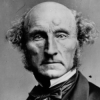
John Stuart Mill
John Stuart Millwas an English philosopher, political economist, feminist, and civil servant. One of the most influential thinkers in the history of liberalism, he contributed widely to social theory, political theory and political economy. He has been called "the most influential English-speaking philosopher of the nineteenth century." Mill's conception of liberty justified the freedom of the individual in opposition to unlimited state control...
NationalityEnglish
ProfessionPhilosopher
Date of Birth20 May 1806
men logic granted
It must be granted that in every syllogism, considered as an argument to prove the conclusion, there is a petitio principii. When we say, All men are mortal Socrates is a man therefore Socrates is mortal; it is unanswerably urged by the adversaries of the syllogistic theory, that the proposition, Socrates is mortal.
people sides both-sides
There is always hope when people are forced to listen to both sides.
men class despair
I have observed that not the man who hopes when others despair, but the man who despairs when others hope, is admired by a large class of persons as a sage.
amount character courage generally mental moral society strength
Eccentricity has always abounded when and where strength of character has abounded; and the amount of eccentricity in a society has generally been proportional to the amount of genius, mental vigor, and moral courage which it contained.
mean numbers people
The will of the people, moreover, practically means the will of the most numerous or the most active part of the people; the majority, or those who succeed in making themselves accepted as the majority; type people, consequently, may desire to oppress a part of their number; and precautions are as much needed against this as against any other abuse of power.
strong average class
There is one characteristic of the present direction of public opinion, peculiarly calculated to make it intolerant of any marked demonstration of individuality. The general average of mankind are not only moderate in intellect, but also moderate in inclinations: they have no tastes or wishes strong enough to incline them to do anything unusual, and they consequently do not understand those who have, and class all such with the wild and intemperate whom they are accustomed to look down upon.