Joseph Stiglitz
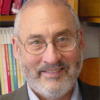
Joseph Stiglitz
Joseph Eugene Stiglitz, ForMemRS, FBA, is an American economist and a professor at Columbia University. He is a recipient of the Nobel Memorial Prize in Economic Sciencesand the John Bates Clark Medal. He is a former senior vice president and chief economist of the World Bank and is a former member and chairman of theCouncil of Economic Advisers. He is known for his critical view of the management of globalization, laissez-faire economists, and some international institutions like the International Monetary...
NationalityAmerican
ProfessionEconomist
Date of Birth9 February 1943
CountryUnited States of America
Not everybody is qualified to go to Stanford, but everybody should have access to the best qualify for which they are eligible.
Active learning is always involved with interaction between teachers and students and Socratic methods and that's gonna continue.
If you're injured in an automobile accident, and you sue the driver, you get much more for your injury than if you're fighting for your country. There's a double standard here.
But individuals and firms spend an enormous amount of resources acquiring information, which affects their beliefs; and actions of others too affect their beliefs.
Trickle-down economics is a myth. Enriching corporations - as the TPP would - will not necessarily help those in the middle, let alone those at the bottom.
The budgetary cost to the UK of the wars in Iraq and Afghanistan through 2010 will total more than £18 billion. If we include the social costs the total impact will exceed £20 billion.
It's actually a tribute to the quality of economics teaching that they have persuaded so many generations of students to believe in so much that seems so counter to what the world is like. Many of the things that I'm going to describe make so much more common sense than these notions that seem counter to what ones eyes see every day.
As I noted in my Nobel lecture, an early insight in my work on the economics of information concerned the problem of appropriability - the difficulty that those who pay for information have in getting returns.
They [free market policies] were never based on solid empirical and theoretical foundations, and even as many of these policies were being pushed, academic economists were explaining the limitations of markets for instance, whenever information is imperfect, which is to say always.
The protesters have called into question whether there is a real democracy. Real democracy is more than the right to vote once every two or four years. The choices have to be meaningful. But increasingly, and especially in the US, it seems that the political system is more akin to "one dollar one vote" than to "one person one vote". Rather than correcting the market failures, the political system was reinforcing them.
Climate change is a reality.
The only people benefiting in Iraq war are George Bush's Jr. friends in the oil industry. He has done the American economy and the global economy an enormous disfavor, but his Texan friends couldn't be happier.
What most Americans mean when they say "the end of the recession" is, "When will it be back to normal? When can we get jobs? When will the employment rate be back to 4 percent or 5 percent?"
Most poor people earn more than minimum wage when they are working; their problem is not low wages. The problem comes when they are not working.