Karl Barth
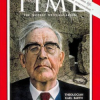
Karl Barth
Karl BarthMay 10, 1886 – December 10, 1968) was a Swiss Reformed theologian who is often regarded as the greatest Protestant theologian of the twentieth century. Pope Pius XII called him the most important Christian theologian since St. Thomas Aquinas. His influence expanded well beyond the academic realm to mainstream culture, leading him to be featured on the cover of Time on April 20, 1962...
NationalitySwiss
ProfessionReligious Author
Date of Birth10 May 1886
CountrySwitzerland
Where dogmatics exists at all, it exists only with the will to be a Church dogmatics, a dogmatics of the ecumenical Church.
A free theologian works in communication with other theologians...He waits for them and asks them to wait for him. Our sadly lacking yet indispensable theological co-operation depends directly or indirectly on whether or not we are wiling to wait for one another, perhaps lamenting, yet smiling with tears in our eyes.
We are now assuming that we have here the centre and goal of all God's works, and therefore the hidden beginning of them all. We are also assuming that the prominent place occupied by this divine work has something corresponding to it in the essence of God, that the Son forms the centre of the Trinity, and that the essence of the divine being has, so to speak, its locus ... in His work, in the name and person of Jesus Christ.
Exegesis, exegesis, and yet more exegesis!
What expressions we used - in part taken over and in part newly invented! above all, the famous 'wholly other' breaking in upon us 'perpendicularly from above,' the not less famous 'infinite qualitative distinction' between God and man, the vacuum, the mathematical point, and the tangent in which alone they must meet.
For the millions that suffer unjustly, the Confessing Church does not yet have a heart.
We have before us the fiendishness of business competition and the world war, passion and wrongdoing, antagonism between classes and moral depravity within them, economic tyranny above and the slave spirit below.
There is no philosophy that is not to some extent also theology.
Dogmatics is the testing of Church doctrine and proclamation,
Men have never been good, they are not good and they never will be good.
If I have a system it is limited to a recognition of what Kierkegaard called 'the infinite qualitative distinction' between time and eternity
The Truth lies not in the Yes and not in the No, but in the knowledge and the beginning from which the Yes and the No arise.
The Spirit bears witness. Ecstasy and enlightenment, inspiration and intuition are not necessary. Happy is the man who is worthy of these; but woe unto us if we wait for such experiences; woe unto us if we do not perceive that these things are of secondary importance.
Whether the angels play only Bach praising God, I am not quite sure.