Kenneth Rexroth
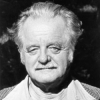
Kenneth Rexroth
Kenneth Charles Marion Rexrothwas an American poet, translator and critical essayist. He is regarded as a central figure in the San Francisco Renaissance, and paved the groundwork for the movement. Although he did not consider himself to be a Beat poet, and disliked the association, he was dubbed the "Father of the Beats" by Time Magazine. He was among the first poets in the United States to explore traditional Japanese poetic forms such as haiku. He was also a prolific...
NationalityAmerican
ProfessionPoet
Date of Birth22 December 1905
CountryUnited States of America
Harvey , Galileo , Copernicus do not seem occult to us, but they did so to their contemporaries, hierophants of the mysteries of Natural Law, revealers of the secrets of a New Order of the Ages. After all, the movement eventually came to be called the Age of Enlightenment.
As Aristotle said, you have to be an aristocrat or a reactionary to write a good proletarian poem.
Men who live like Casanova are seldom interested in themselves; their egocentricity does not give them time for egotism.
Any talented decadent can make unreality believable. To make reality convincing is another matter, a matter for only the greatest masters.
The dumping of the mentally ill, full of these new psychiatric drugs, into the streets is a scandal. It's been carried furthest in New York, where whole sections of the decayed Upper West Side are being filled with pensioners and psychotic patients on stelazine, lithium carbonate, and everything else under the sun. They can't diagnose the patient, so they give him the whole psychiatric pharmacopoeia at once, and he walks around in a psychotic trance beautifully painted all over with petrochemicals.
You learn nothing if you carry with you a journalistic system of values, which is invented to save reporters from experience.
Did you know I staged the first performance in America of At the Hawk's Well?
I've been around jazz and jazz musicians most of my life.
The free, creative, loving people who shine so brightly in my memory of studios and coffee shops have become models for a huge section of the population. If they in turn can just stay alive in the face of power and terror, they may become the decisive section.
It takes great labor to uncover the convincing simple speech of the heart. Poetic candor comes with hard labor, so even does impetuosity and impudence.
Ex-cons always say, "You never know what makes the wheels go round until you've done time in the joint." This is even more true of psychiatric hospitals. It is a perfect mass hypostatization of society, the organization of the Social Lie.
Now I know surely and forever, However much I have blotted our Waking love, its memory is still there. And I know the web, the net, The blind and crippled bird. For then, for One brief instant it was not blind, nor Trapped, not crippled. For one heart beat the Heart was free and moved itself. O love, I who am lost and damned with words, Whose words are a business and an art, I have no words. These words, this poem, this Is all confusion and ignorance. But I know that coached by your sweet heart, My heart beat one free beat and sent Through all my flesh the blood of truth.
Today we hear a great deal about Organizational Men, Mass Culture, Conformity, the Lonely Crowd, the Power Elite and its Conspiracy of Mediocrity. We forget that the very volume of this criticism is an indication that our society is still radically pluralistic. Not only are there plenty of exceptionalists who take exception to the stereotyping of the mass culture but that very string of epithets comes from a series of books that have been recent best-sellers, symptoms of a popular, living tradition of dissent from things as they are.
It is a commonplace that Racine is untranslatable. This is not because his verse is difficult, but because it is not.