Lord Chesterfield
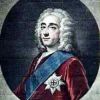
Lord Chesterfield
Philip Dormer Stanhope, 4th Earl of Chesterfield KG PCwas a British statesman, and a man of letters, and wit. He was born in London to Philip Stanhope, 3rd Earl of Chesterfield, and Lady Elizabeth Savile, and known as Lord Stanhope until the death of his father, in 1726. Educated at Trinity Hall, Cambridge, he subsequently embarked on the Grand Tour of the Continent, to complete his education as a nobleman, by exposure to the cultural legacies of Classical antiquity and...
acquired knowledge
Knowledge of the world is only to be acquired in the world, and not in a closet.
knowledge jewels curiosity
Manners must adorn knowledge and smooth its way in the world, without them it is like a great rough diamond, very well in a closet by way of curiosity, and also for its intrinsic value; but most prized when polished.
education knowledge world
Knowledge of the world in only to be acquired in the world, and not in a closet.
knowledge men shining
Second-rate knowledge, and middling talents, carry a man farther at courts, and in the busy part of the world, than superior knowledge and shining parts.
knowledge giving credit
To know a little of anything gives neither satisfaction nor credit, but often brings disgrace or ridicule.
inspirational knowledge accomplishment
Knowledge may give weight, but accomplishments give luster, and many more people see than weigh.
book reading knowledge
Learning is acquired by reading books, but the much more necessary learning, the knowledge of the world, is only to be acquired by reading men, and studying all the various facets of them.
knowledge pockets watches
Pocket all your knowledge with your watch, and never pull it out in company unless desired.
knowledge foundation remember
Remember that whatever knowledge you do not solidly lay the foundation of before you are eighteen, you will never be master of while you breathe.
ignorance knowledge pride
Our conjectures pass upon us for truths; we will know what we do not know, and often, what we cannot know: so mortifying to our pride is the base suspicion of ignorance.
ignorance knowledge people
A seeming ignorance is very often a most necessary part of worldly knowledge. It is, for instance, commonly advisable to seem ignorant of what people offer to tell you; and, when they say, Have you not heard of such a thing? to answer, No, and to let them go on, though you know it already.
trust knowledge independence
In short, let it be your maxim through life, to know all you can know, yourself; and never to trust implicitly to the informationsof others.
account admitted ask company considered dances deep drink esteem exclude great ideas invite joking merit merits plays respected sake sings sought whoever
Whoever is admitted or sought for, in company, upon any other account than that of his merit and manners, is never respected there, but only made use of. We will have such-a-one, for he sings prettily; we will invite such-a-one to a ball, for he dances well; we will have such-a-one at supper, for he is always joking and laughing; we will ask another because he plays deep at all games, or because he can drink a great deal. These are all vilifying distinctions, mortifying preferences, and exclude all ideas of esteem and regard. Whoever is had (as it is called) in company for the sake of any one thing singly, is singly that thing, and will never be considered in any other light; consequently never respected, let his merits be what they will.
company digest evenings learning swallow
Swallow all your learning in the morning, but digest it in company in the evenings