Louis MacNeice
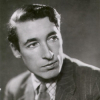
Louis MacNeice
Frederick Louis MacNeice CBEwas an Irish poet and playwright. He was part of the generation of the Auden Group, also sometimes known as the "Thirties poets", that included W. H. Auden, Stephen Spender and Cecil Day-Lewis, nicknamed collectively "MacSpaunday" – a term coined by Roy Campbell, in his Talking Bronco. MacNeice's body of work was widely appreciated by the public during his lifetime, due in part to his relaxed, but socially and emotionally aware style. Never as overtlypolitical as some...
NationalityBritish
ProfessionPoet
Date of Birth12 September 1907
It is a retrogression when human beings begin to insist on uniform, on one-mindedness, on conditioning their offspring so that all their reactions are automatic.
Our freedom as free lancesadvances toward its end;The earth compels, upon itSonnets and birds descend;And soon my friend We shall have no time for dances.
I would admit that poetry is something more than mere communication and that if that 'something more' could be abstracted from the whole, it might well prove to be that which makes the whole a poem.
My birth was managed so rottenly that my mother had eventually to have a hysterectomy, after which she was ill off & on till she dies for obscure reasons when I was just 7.
Some on commission, some for the love of learning, some because they have nothing better to do or because they hope these walls of books will deaden the drumming of the demon in their ears.
My stepmother appeared when I was about 9. My brother was sent off to an institute in Scotland & my sister & I were sent to school. As my stepmother's ideas were then wholly Quaker, mixed with a naive & charming innocence & a little snobbery, it was one dotty epoch on top of another. I always remained terrified of my father.
Mysticism, in the narrow sense, implies a specific experience which is foreign to most poets and most men, but on the other hand, it represents an instinct which is a human sine qua non.
Though I do regard the Inquisition in general and the burning of Giordano Bruno in particular as blots on the history of the Roman Catholic Church, I am far from being actuated by hatred of that church, and in fact cannot imagine that European civilization would have developed or survived without it.
Time was away and somewhere else, / There were two glasses and two chairs / And two people with one pulse.
Wyndham Lewis is basically a pessimist, thinking of human beings as doomed animals or determinist machines. His theory of satire is based on this view, and he finds plenty of evidence to support it in contemporary practice.
The poet is primarily a spokesman, making statements or incantations on behalf of himself or others - usually for both, for it is difficult to speak for oneself without speaking for others or to speak for others without speaking for oneself.
The poet is a specialist in something which everyone practises. Herein, poetry differs from the other arts. Everyone does not practise music or painting or even dancing, but everyone without exception puts together words poetically every day of his life.
The poet has no greater number of muscles than the ordinary conversationalist; he merely has more highly developed muscles and better coordination. And he practises his activity according to a stricter set of rules.
We are all fed from hundreds and thousands of hands. Often we do not know whose they are nor how they work. Only a few of us ever visualize the hands that grope in the coal mines or push levers in the mills or handle axes in the lumber camp.