Louis MacNeice
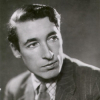
Louis MacNeice
Frederick Louis MacNeice CBEwas an Irish poet and playwright. He was part of the generation of the Auden Group, also sometimes known as the "Thirties poets", that included W. H. Auden, Stephen Spender and Cecil Day-Lewis, nicknamed collectively "MacSpaunday" – a term coined by Roy Campbell, in his Talking Bronco. MacNeice's body of work was widely appreciated by the public during his lifetime, due in part to his relaxed, but socially and emotionally aware style. Never as overtlypolitical as some...
NationalityBritish
ProfessionPoet
Date of Birth12 September 1907
Man is an unhappy animal and one that can talk. If he was not unhappy, he would have nothing to talk about. But if he had nothing to talk about, he would be unhappy.
Nearly all children have a feeling for rhythm in words, for the delicate pattern of nursery rhymes. Many adults have lost this feeling and, if they read verse at all, demand a far cruder music than that which they once appreciated.
I would have a poet able bodied, fond of talking, a reader of the newspapers, capable of pity and laughter, informed in economics, appreciative of women, involved in personal relationships, actively interested in politics, susceptible to physical impressions.
The sunlight in the gardenHardens and grows cold,We cannot cage the minuteWithin its nets of gold
Crumbling between the fingers, under the feet, / Crumbling behind the eyes, / Their world gives way and dies / And something twangs and breaks at the end of the street.
The rules or 'laws' of poetry are only tentative devices, an approximate scheme. There is no Sinaitic recipe for poetry, for the individual poem is the norm.
So they were married-to be the more together- And found they were never again so much together, Divided by the morning tea, By the evening paper, By children and tradesmen's bills
Good poets have written in order to describe something or to preach something - with their eye on the object or the end. The essence of the poetry does not lie in the thing described or in the message imparted but in the resulting concrete unity, the poem.
For this reason poets and artists developed the doctrine of Art for Art's Sake. The community did not appear to need them, so, tit for tat, they did not need the community. This being granted, it was no longer necessary or even desirable to make one's poetry either intelligible or sympathetic to the community.
Everyone is not able, or inclined, to write poetry in the narrower sense any more than everyone is qualified to take part in a walking race. But just as all of us can and do walk, so all of us can and do use language poetically.
Dublin was hardly worried by the war; her old preoccupations were still preoccupations. The intelligentsia continued their parties; their mutual malice was as effervescent as ever.
Democracy - or any improvement on it - will rest on the layman's right to criticize. His criticism will be often - very often - damn silly, but if, like Plato and the Fascists, we take away his right to criticize, we take away his right to appreciate.
As things may turn out in the future, people may (though I doubt it) find that their work gives them all the enjoyment - physical, intellectual or aesthetic - which they may require. That certainly is not so now.
All the arts, to varying degrees, involve some kind of a compromise. This being so, how far need the radio dramatist go to meet the public without losing sight of himself and his own standards of value?