Louis Sullivan
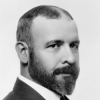
Louis Sullivan
Louis Henry Sullivan was an American architect, and has been called the "father of skyscrapers" and "father of modernism". He is considered by many as the creator of the modern skyscraper, was an influential architect and critic of the Chicago School, was a mentor to Frank Lloyd Wright, and an inspiration to the Chicago group of architects who have come to be known as the Prairie School. Along with Henry Hobson Richardson and Frank Lloyd Wright, Sullivan is one of...
NationalityAmerican
ProfessionArchitect
Date of Birth3 September 1856
CityBoston, MA
CountryUnited States of America
It cannot for a moment be doubted that an art work to be alive, to awaken us to its life, to inspire us sooner or later with its purpose, must indeed be animate with a soul, must have been breathed upon by the spirit and must breathe in turn that spirit.
How strange it seems that education, in practice, so often means suppression: that instead of leading the mind outward to the light of day it crowds things in upon it that darken and weary it.
The architect who combines in his being the powers of vision, of imagination, of intellect, of sympathy with human need and the power to interpret them in a language vernacular and time--- is he who shall create poems in stone.
When you look on one of your contemporary 'good copies' of historical remains, ask yourself the question: Not what style, but in what civilization is this building? And the absurdity, vulgarity, anachronism and solecism of the modern structure will be revealed to you in a most startling fashion.
Form ever follows function.
A proper building grows naturally, logically, and poetically out of all its conditions.
Every building is like a person. Single and unrepeatable.
To teach is to touch the heart and impel it to action.
Once you learn to look at architecture not merely as an art more or less well or more or less badly done, but as a social manifestation, the critical eye becomes clairvoyant.
What are books but folly, and what is an education but an arrant hypocrisy, and what is art but a curse when they touch not the heart and impel it not to action?
Man shall find his anchorage in self-recognition.
Alas, the world has never known a sound social fabric, a fabric sound and clean to the core and kindly. For it has ever turned its back on Man.
Form follows function.
If with open mind one reads and observes industriously and long; if in so doing one covers a wide field and so covering reflects in terms of realism, he is likely, soon or late, to be brought to a sudden consciousness that Man is an unknown quantity and his existence unsuspected.