Luc de Clapiers
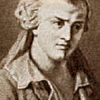
Luc de Clapiers
Luc de Clapiers, marquis de Vauvenargueswas a minor French writer, a moralist. He died at age 31, in broken health, having published the year prior—anonymously—a collection of essays and aphorisms with the encouragement of Voltaire, his friend. He first received public notice under his own name in 1797, and from 1857 on, his aphorisms became popular. In the history of French literature, his significance lies chiefly in his friendship with Voltaire...
NationalityFrench
ProfessionWriter
Date of Birth6 August 1715
CountryFrance
The greatest evil which fortune can inflict on men is to endow them with small talents and great ambition.
Necessity embitters the evils which it cannot cure.
We have neither the strength nor the opportunity to accomplish all the good and all the evil which we design.
Our actions are neither so good nor so evil as our impulses.
The greatest evil that fortune can bring to men is to endow them with feeble resources and yet to make them ambitious.
We are very wrong to think that some fault or other can exclude virtue, or to consider the alliance of good and evil as a monstrosity or an enigma.
Wicked people are always surprised to find ability in those that are good.
The wicked are always surprised to find ability in the good.
Conscience, the organ of feeling which dominates us and of the opinions which rule us, is presumptuous in the strong, timid in the weak and unfortunate, uneasy in the undecided.
Despair puts the last touch not only to our misery but also to our weakness.
Prosperity makes some friends and many enemies.
Indolence is the sleep of the mind.
The shortness of life cannot dissuade us from its pleasures, nor console us for its pains.
With kings, nations, and private individuals, the strongest assume to themselves rights over the weakest, and the same rule is followed by animals, by matter, by the elements, so that everything is performed in the universe by violence. And that order which we blame with some appearance of justice is the most universal, most absolute, most unchangeable, and most ancient law of nature.