Lucretius
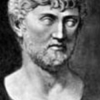
Lucretius
Titus Lucretius Caruswas a Roman poet and philosopher. His only known work is the epic philosophical poem De rerum natura about the tenets and philosophy of Epicureanism, and which is usually translated into English as On the Nature of Things...
NationalityRoman
ProfessionPoet
born
Nothing from nothing ever yet was born.
light lovely without-you
You alone govern the nature of things. Without you nothing emerges into the light of day, without you nothing is joyous or lovely.
bears want humans
Do we not see all humans unaware Of what they want, and always searching everywhere, And changing place, as if to drop the load they bear?
eye men hands
And since the mind is of a man one part, Which in one fixed place remains, like ears, And eyes, and every sense which pilots life; And just as hand, or eye, or nose, apart, Severed from us, can neither feel nor be, But in the least of time is left to rot, Thus mind alone can never be, without The body and the man himself, which seems, As 'twere the vessel of the same- or aught Whate'er thou'lt feign as yet more closely joined: Since body cleaves to mind by surest bonds.
race mind body
For common instinct of our race declares That body of itself exists: unless This primal faith, deep-founded, fail us not, Naught will there be whereunto to appeal On things occult when seeking aught to prove By reasonings of mind.
self body void
All nature, then, as self-sustained, consists Of twain of things: of bodies and of void In which they're set, and where they're moved around.
spring air body
When bodies spring apart, because the air Somehow condenses, wander they from truth: For then a void is formed, where none before; And, too, a void is filled which was before.
forever doubt body
But yet creation's neither crammed nor blocked About by body: there's in things a void- Which to have known will serve thee many a turn, Nor will not leave thee wandering in doubt, Forever searching in the sum of all, And losing faith in these pronouncements mine.
blow cells inward
...Nature allows Destruction nor collapse of aught, until Some outward force may shatter by a blow, Or inward craft, entering its hollow cells, Dissolve it down.
elements tools divine
Meantime, when once we know from nothing still Nothing can be create, we shall divine More clearly what we seek: those elements From which alone all things created are, And how accomplished by no tool of Gods.
strong men would-be
I own with reason: for, if men but knew Some fixed end to ills, they would be strong By some device unconquered to withstand Religions and the menacings of seers.
law sky names
I prove the supreme law of Gods and sky, And the primordial germs of things unfold, Whence Nature all creates, and multiplies And fosters all, and whither she resolves Each in the end when each is overthrown. This ultimate stock we have devised to name Procreant atoms, matter, seeds of things, Or primal bodies, as primal to the world.
blow order should-have
Certainly it was no design of the atoms to place themselves in a particular order, nor did they decide what motions each should have. But atoms were struck with blows in many ways and carried along by their own weight from infinite times up to the present.
prayer wind sea
When the supreme violence of a furious wind upon the sea sweeps over the waters the chief admiral of a fleet along with his mighty legions, does he not crave the gods' peace with vows and in his panic seek with prayers the peace of the winds and favouring breezes. Nonetheless, he is caught up in the furious hurricane and driven upon the shoals of death.