Ludwig von Mises
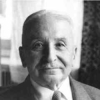
Ludwig von Mises
Ludwig Heinrich Edler von Miseswas a theoretical Austrian School economist. He is best known for his work on praxeology, a study of human choice and action. Mises emigrated from Austria to the United States in 1940. Mises's writings have exerted significant influence on the libertarian movement in the United States since the mid-20th century...
NationalityAustrian
ProfessionEconomist
Date of Birth29 September 1881
CountryAustria
Ludwig von Mises quotes about
religious believe logical-arguments
No one should expect that any logical argument or any experience could ever shake the almost religious fervor of those who believe in salvation through spending and credit expansion.
country believe government
A famous, very often quoted phrase says: "That government is best, which governs least." I do not believe this to be a correct description of of the functions of a good government. Government ought to do all the things for which it is needed and for which it is established. Government ought to protect the individuals within the country against the violent and fraudulent attacks of gangsters, and it should defend the country against foreign enemies. These are the functions of government within a free system, within the system of the market economy.
believe debt way
The financial history of the last century shows a steady increase in the amount of public indebtedness. Nobody believes that the states will eternally drag the burden of these interest payments. It is obvious that sooner or later all these debts will be liquidated in some way or other, but certainly not by payment of interest and principal according to the terms of the contract.
believe order people
The direction of all economic affairs is in the market society a task of the entrepreneurs. Theirs is the control of production. They are at the helm and steer the ship. A superficial observer would believe that they are supreme. But they are not. They are bound to obey unconditionally the captain's orders. The captain is the consumer. ...[Consumers] make poor people rich and rich people poor. They determine precisely what should be produced, in what quality, and in what quantities.
believe envy feelings
It is certain that many intellectuals envy the higher income of prosperous businessmen and that these feelings drive them toward socialism. They believe that the authorities of a socialist commonwealth would pay them higher salaries than those that they earn under capitalism.
believe government mankind
Only the naive inflationist's could believe that government could enrich mankind through fiat money.
income wealth enterprise
In capitalist enterprise there is no secure income and no security of wealth.
causes wealth mass
The wealth of the well-to-do of an industrial society is both the cause and effect of the masses' well-being.
almsgiving
All almsgiving inevitably tends to pauperize the recipient.
jobs government people
The interventionist policy (big government) provides thousands and thousands of people with safe, placid, and not too strenuous jobs at the expense of the rest of society.
freedom men civilization
Western civilization is based upon the libertarian principle, and all its achievements are the results of the action of free men.
unemployment doe granted
Assistance granted to the unemployed does not dispose of unemployment. It makes it easier for the unemployed to remain idle.
careers fundamentals matter
The socialist system, however, forbids this fundamental freedom to choose one's own career. Under socialist conditions, there is only one economic authority, and it has the right to determine all matters concerning production.
may poverty execution
The elimination of profit, whatever methods may be resorted to for its execution, must transform society into a senseless jumble. It would create poverty for all.