Ludwig Wittgenstein
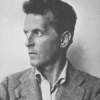
Ludwig Wittgenstein
Ludwig Josef Johann Wittgensteinwas an Austrian-British philosopher who worked primarily in logic, the philosophy of mathematics, the philosophy of mind, and the philosophy of language. From 1929 to 1947, Wittgenstein taught at the University of Cambridge. During his lifetime he published just one slim book, the 75-page Tractatus Logico-Philosophicus, one article, one book review and a children's dictionary. His voluminous manuscripts were edited and published posthumously. Philosophical Investigations appeared as a book in 1953, and has since come to be...
NationalityAustrian
ProfessionPhilosopher
Date of Birth26 April 1889
CityVienna, Austria
CountryAustria
Where our language suggests a body and there is none: there, we should like to say, is a spirit.
We must plow through the whole of language.
All propositions are of equal value.
Elementary propositions consist of names.
If a lion could talk, we could not understand him.
Language is a part of our organism and no less complicated than it.
A French politician once wrote that it was a peculiarity of the French language that in it words occur in the order in which one thinks them.
One of the most misleading representational techniques in our language is the use of the word 'I.'
You learned the concept 'pain' when you learned language.
It is not humanly possible to gather immediately from it what the logic of language is. Language disguises thought.
For a large class of cases -- though not for all -- in which we employ the word ''meaning'' it can be defined thus: the meaning of a word is its use in the language.
Language disguises the thought; so that from the external form of the clothes one cannot infer the form of the thought they clothe, because the external form of the clothes is constructed with quite another object than to let the form of the body be recognized.
To imagine a language is to imagine a form of life.
A picture whose pictorial form is logical form is called a logical picture.