Ludwig Wittgenstein
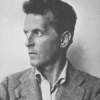
Ludwig Wittgenstein
Ludwig Josef Johann Wittgensteinwas an Austrian-British philosopher who worked primarily in logic, the philosophy of mathematics, the philosophy of mind, and the philosophy of language. From 1929 to 1947, Wittgenstein taught at the University of Cambridge. During his lifetime he published just one slim book, the 75-page Tractatus Logico-Philosophicus, one article, one book review and a children's dictionary. His voluminous manuscripts were edited and published posthumously. Philosophical Investigations appeared as a book in 1953, and has since come to be...
NationalityAustrian
ProfessionPhilosopher
Date of Birth26 April 1889
CityVienna, Austria
CountryAustria
A mathematical proof must be perspicuous.
All mathematics is tautology.
I Once wrote: "In mathematics process and result are equivalent."
Logic takes care of itself; all we have to do is to look and see how it does it.
With my full philosophical rucksack I can only climb slowly up the mountain of mathematics.
There can never be surprises in logic.
Is my understanding only blindness to my own lack of understanding? It often seems so to me.
Our civilization is characterized by the word ''progress.'' Progress is its form rather than making progress being one of its features. Typically it constructs. It is occupied with building an ever more complicated structure. And even clarity is sought only
Vanity of vanities, all is vanity.
The mystical is not how the world is, but that it is
A new word is like a fresh seed sewn on the ground of the discussion.
It seems to me that, in every culture, I come across a chapter headed ''Wisdom.'' And then I know exactly what is going to follow: ''Vanity of vanities, all is vanity.''
Kierkegaard was by far the most profound thinker of the last century. Kierkegaard was a saint.
If you want to go down deep you do not need to travel far; indeed, you don't have to leave your most immediate and familiar surroundings.