Ludwig Wittgenstein
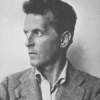
Ludwig Wittgenstein
Ludwig Josef Johann Wittgensteinwas an Austrian-British philosopher who worked primarily in logic, the philosophy of mathematics, the philosophy of mind, and the philosophy of language. From 1929 to 1947, Wittgenstein taught at the University of Cambridge. During his lifetime he published just one slim book, the 75-page Tractatus Logico-Philosophicus, one article, one book review and a children's dictionary. His voluminous manuscripts were edited and published posthumously. Philosophical Investigations appeared as a book in 1953, and has since come to be...
NationalityAustrian
ProfessionPhilosopher
Date of Birth26 April 1889
CityVienna, Austria
CountryAustria
A main cause of philosophical disease-an unbalanced diet: one nourishes one's thinking with only one kind of example.
Hegel seems to me to be always wanting to say that things which look different are really the same. Whereas my interest is in showing that things which look the same are really different. I was thinking of using as a motto for my book a quotation from King Lear: 'I’ll teach you differences'. ... 'You’d be surprised' wouldn’t be a bad motto either.
Schiller writes in a letter [to Goethe, 17 December 1795] of a 'poetic mood'. I think I know what he means, I think I am familiar with it myself. It is the mood of receptivity to nature and one in which one's thoughts seem as vivid as nature itself.
If life becomes hard to bear we think of a change in our circumstances. But the most important and effective change, a change in our own attitude, hardly even occurs to us, and the resolution to take such a step is very difficult for us.
I think I summed up my attitude to philosophy when I said: philosophy ought really to be written only as a poetic composition.
A French politician once wrote that it was a peculiarity of the French language that in it words occur in the order in which one thinks them.
When we think about the future of the world, we always have in mind its being where it would be if it continued to move as we see it moving now. We do not realize that it moves not in a straight line and that its direction changes constantly.
Philosophy unravels the knots in our thinking; hence its results must be simple, but its activity is as complicated as the knots that it unravels.
When we can't think for ourselves, we can always quote
Only when one thinks even much more madly than the philosophers can one solve their problems.
Human beings have a physical need to tell themselves when at work: "Let's have done with it now," and it's having constantly to go on thinking in the face of this need when philosophizing that makes this work so strenuous.
It's only by thinking even more crazily than philosophers do that you can solve their problems.
You could attach prices to thoughts. Some cost a lot, some a little. And how does one pay for thoughts? The answer, I think, is: with courage.
So we do sometimes think because it has been found to pay.