Ludwig Wittgenstein
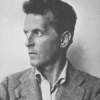
Ludwig Wittgenstein
Ludwig Josef Johann Wittgensteinwas an Austrian-British philosopher who worked primarily in logic, the philosophy of mathematics, the philosophy of mind, and the philosophy of language. From 1929 to 1947, Wittgenstein taught at the University of Cambridge. During his lifetime he published just one slim book, the 75-page Tractatus Logico-Philosophicus, one article, one book review and a children's dictionary. His voluminous manuscripts were edited and published posthumously. Philosophical Investigations appeared as a book in 1953, and has since come to be...
NationalityAustrian
ProfessionPhilosopher
Date of Birth26 April 1889
CityVienna, Austria
CountryAustria
Telling someone something he does not understand is pointless, even if you add that he will not be able to understand it.
Frazer is much more savage than most of his savages, for they are not as far removed from the understanding of spiritual matter as a twentieth-century Englishman. His explanations of primitive practices are much cruder than the meaning of these practices themselves.
What makes a subject difficult to understand — if it is significant, important — is not that some special instruction about abstruse things is necessary to understand it. Rather it is the contrast between the understanding of the subject and what most people want to see. Because of this the very things that are most obvious can become the most difficult to understand. What has to be overcome is not difficulty of the intellect but of the will.
If a lion could talk, we could not understand him.
Is my understanding only blindness to my own lack of understanding? It often seems so to me.
Our civilization is characterized by the word ''progress.'' Progress is its form rather than making progress being one of its features. Typically it constructs. It is occupied with building an ever more complicated structure. And even clarity is sought only
Vanity of vanities, all is vanity.
The mystical is not how the world is, but that it is
A new word is like a fresh seed sewn on the ground of the discussion.
It seems to me that, in every culture, I come across a chapter headed ''Wisdom.'' And then I know exactly what is going to follow: ''Vanity of vanities, all is vanity.''
Kierkegaard was by far the most profound thinker of the last century. Kierkegaard was a saint.
If you want to go down deep you do not need to travel far; indeed, you don't have to leave your most immediate and familiar surroundings.
Where our language suggests a body and there is none: there, we should like to say, is a spirit.
Architecture immortalizes and glorifies something. Hence there can be no architecture where there is nothing to glorify.