Margaret Chan
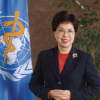
Margaret Chan
Margaret Chan Fung Fu-chun, OBE, JPis a Hong Kong Chinese and Canadian physician, who serves as the Director-General of the World Health Organizationfor 2006–17. Chan was elected by the Executive Board of WHO on 8 November 2006, and was endorsed in a special meeting of the World Health Assembly on the following day. Chan has previously served as Director of Health in the Hong Kong Government, representative of the WHO Director-General for Pandemic Influenza and WHO Assistant Director-General for Communicable...
NationalityChinese
ProfessionPublic Servant
CountryChina
We must understand that when one country is not safe, the world is not safe. Pandemic influenza, by nature, will go around the world, so it is important for us to work as an international community to get a better handle on the issue.
That was a time when we were really working together as an international community of academics, politicians, public health experts. Everybody really was so focused,
New diseases like SARS and bird flu cause anxiety in the community. People get worried, some to the extent that it even affects their health. You feel very sad, and yet you must carry on and maintain your cool in very trying and difficult moments. You have to tough it out.
The international community should treat this as a window of opportunity to ramp up preparedness and response.
This change to a higher phase of alert is a signal to governments, to ministries of health and other ministries, to the pharmaceutical industry and the business community that certain actions now should be undertaken with increased urgency and at an accelerated pace.
For the first time in human history, we have a chance to prepare ourselves for a pandemic before it arrives, ... It is incumbent upon the global community to act now.
I think U.N. organizations are important organizations. They exist for good reasons. And we also admit that there is room for us to improve the way we do business. The WHO will be a very positive and proactive partner in the overall U.N. reform, which is also important.
WHO has a country office in nearly every developing country, usually located close to the Ministry of Health. Staff in these offices need to do much more to help ministries of health strengthen their national health plans and strategies and then negotiate with development partners to support these priorities and follow these plans.
Time is of the essence. We must act now if we are to have the maximum possible opportunity to contain a pandemic.
Timing is unpredictable and the severity is uncertain.
We are not in a pandemic situation. It is still an animal disease.
If the country has invested in the training of doctors or nurses or midwives for that matter, people are beginning to say, 'Should we not ask them to serve a number of years in the country who invested in their training?' I think this is now coming to be an interesting discussion.
New and emerging infections keep coming back and the world needs a collective defense system, and that requires international cooperation and collaboration, in the name of global solidarity.
The World Health Organization did a world health report in 2006. In the whole world about 60 countries are in dire situation in terms of having enough doctors. And many of these countries are in Sub-Saharan Africa. You know, that part of the world alone needs one million doctors.