Margaret Fuller
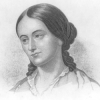
Margaret Fuller
Sarah Margaret Fuller Ossoli, commonly known as Margaret Fuller, was an American journalist, critic, and women's rights advocate associated with the American transcendentalism movement. She was the first full-time American female book reviewer in journalism. Her book Woman in the Nineteenth Century is considered the first major feminist work in the United States...
NationalityAmerican
ProfessionActivist
Date of Birth23 May 1810
CityCambridge, MA
CountryUnited States of America
Tragedy is always a mistake; and the loneliness of the deepest thinker, the widest lover, ceases to be pathetic to us so soon as the sun is high enough above the mountains.
Who can ever be alone for a moment in Italy? Every stone has a voice, every grain of dust seems instinct with spirit from the Past, every step recalls some line, some legend of long-neglected lore.
Union is only possible to those who are units. To be fit for relations in time, souls, whether of man or woman, must be able to do without them in the spirit.
Every fact is impure, but every fact contains in it the juices of life. Every fact is a clod, from which may grow an amaranth or a palm.
A man who means to think and write a great deal must, after six and twenty, learn to read with his fingers.
The highest ideal man can form of his own powers, is that which he is destined to attain. Whatever the soul knows how to seek, it cannot fail to obtain. This is the law and the prophets. Knock and it shall be opened, seek and ye shall find. It is demonstrated; it is a maxim.
The critic is beneath the maker, but is his needed friend. The critic is not a base caviler, but the younger brother of genius. Next to invention is the power of interpreting invention; next to beauty the power of appreciating beauty. And of making others appreciate it ...
Artists are always young.
there is such a rebound from parental influence that it generally seems that the child makes use of the directions given by the parent only to avoid the prescribed path.
Our friends should be our incentives to right, but not only our guiding, but our prophetic, stars. To love by right is much, to love by faith is more; both are the entire love, without which heart, mind, and soul cannot be alike satisfied. We love and ought to love one another, not merely for the absolute worth of each, but on account of a mutual fitness of temporary character.
I find no intellect comparable to my own
The critic ... should be not merely a poet, not merely a philosopher, not merely an observer, but tempered of all three.
There is some danger lest there be no real religion in the heart which craves too much daily sympathy.
If any individual live too much in relations, so that he becomes a stranger to the resources of his own nature, he falls, after a while, into a distraction, or imbecility, from which he can only be cured by a time of isolation, which gives the renovating fountains time to rise up.