Max Planck
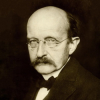
Max Planck
Max Karl Ernst Ludwig Planck, FRSwas a German theoretical physicist whose work on quantum theory won him the Nobel Prize in Physics in 1918...
NationalityGerman
ProfessionScientist
Date of Birth23 April 1858
CityKiel, Germany
CountryGermany
difficulty ifs has-beens
A new truth always has to conend with many difficulties. If it were not so, it would have been discovered much sooner.
nature world vastness
The entire world we apprehend through our senses is no more than a tiny fragment in the vastness of Nature.
ego consciousness humans
Ego is the immediate dictate of human consciousness.
answers unfathomable
Whence come I and whither go I? That is the great unfathomable question, the same for every one of us. Science has no answer to it.
knowledge mind world
Science enhances the moral value of life, because it furthers a love of truth and reverence-love of truth displaying itself in the constant endeavor to arrive at a more exact knowledge of the world of mind and matter around us, and reverence, because every advance in knowledge brings us face to face with the mystery of our own being.
real science-and-religion science-religion
There can never be any real opposition between religion and science; for the one is the complement of the other.
creativity ideas vivid-imagination
The pioneer scientist must have "a vivid intuitive imagination, for new ideas are not generated by deduction, but by artistically creative imagination."
funeral economics
Science advances funeral by funeral
real independent men
There is a real world independent of our senses; the laws of nature were not invented by man, but forced on him by the natural world. They are the expression of a natural world order.
acquisition scientist attainment
A scientist is happy, not in resting on his attainments but in the steady acquisition of fresh knowledge.
mind atoms matter
There is no matter as such—mind is the matrix of all matter.
insight application
Insight must precede application.
science funeral mathematics
Science advances one funeral at a time.
science men ideas
The man who cannot occasionally imagine events and conditions of existence that are contrary to the causal principle as he knows it will never enrich his science by the addition of a new idea.