Michael Chertoff
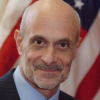
Michael Chertoff
Michael Chertoffis an American attorney who was the second United States Secretary of Homeland Security under Presidents George W. Bush andBarack Obama, and co-author of the USA PATRIOT Act. He previously served as a judge on the United States Court of Appeals for the Third Circuit, as a federal prosecutor, and as Assistant U.S. Attorney General. He succeeded Tom Ridge as United States Secretary of Homeland Security on February 15, 2005...
NationalityAmerican
ProfessionPublic Servant
Date of Birth28 November 1953
CountryUnited States of America
I hope that by doing what the state officials and mayors are doing now, are getting people who are invalids out of the way, encouraging people to leave early, that when the storm hits, there will be property damage but hopefully there won't be a lot of people to rescue,
interprets the law, straight without injecting your personal preferences.
If you start to plan in an emergency, you're not planning, you're improvising,
Chief Paulison has over 30 years of experience in emergency management, working his way up the ranks from firefighter to chief of the Miami-Dade County fire and rescue department,
By all measures, Hurricane Katrina was the largest natural disaster that FEMA has ever been called upon to support, ... Although FEMA pre-positioned significant numbers of personnel, assets and resources before the hurricane made landfall, we now know its capabilities were simply overwhelmed by the magnitude of this storm.
By the end of this year our department anticipates issuing a new inexpensive secure travel card for land border crossings.
including a permanent deputy director to augment the resources available to assist with FEMA's vital mission.
Even the kinds of ingredients you can find in your own kitchen can be used to make bombs. So the problem is with the people and not with the tools.
There really is no vacation from the world in which we live.
The fact that we have not had a terrorist attack in this country in the last six years is not a cause for complacency or a time to celebrate the end of the struggle. The threat is not going away. The enemy has not lost interest. ...Fundamentally, we're in a struggle about ideology. Terrorists want to remake the world in their own image and it is the image that is intolerant of the kinds of institutions that we cherish.
So people have to decide. Do they want to have the security? Do they want to continue to plug the gap [in border security] that GAO has identified and recognize that there will be some costs to doing that? Or do we want to make sure that business isn't hampered and that people can move back and forth readily, and recognize that, if we don't put some barriers in place, we're going to wind up with dangerous people coming into the country?
But one thing that we have done in the last four years is we have really put pressure on the leadership of this organization [Al Qaeda]. We have killed a significant number of leaders. We've captured others. Those that remain have to look over their shoulders, they have to be on the run. So that even if we don't manage to kill or capture them all within four years, what we do do is put the kind of pressure on them that makes them focus on their own skins, as opposed to carrying out attacks.
We now have capabilities in science and technology that raise the very realistic possibility that a small group of terrorists could kill not only thousands of people, as they did on September 11th, but hundreds of thousands of people. And that has changed the dimension of the threat we face.
I think the idea that you can go this alone is - was a huge mistake. And unfortunately, there was a price paid in terms of suffering and pain for people in New Orleans.