Michael Polanyi
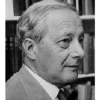
Michael Polanyi
Michael Polanyi, FRSwas a Hungarian-British polymath, who made important theoretical contributions to physical chemistry, economics, and philosophy. He argued that positivism supplies a false account of knowing, which if taken seriously undermines our highest achievements as human beings...
NationalityHungarian
ProfessionScientist
Date of Birth11 March 1891
coherence judgment criteria
Our reliance on the validity of a scientific conclusion depends ultimately on a judgment of coherence; and as there can exist no strict criterion for coherence, our judgment of it must always remain a qualitative, nonformal, tacit, personal judgment.
knowledge hands people
The amount of knowledge which we can justify from evidence directly available to us can never be large. The overwhelming proportion of our factual beliefs continue therefore to be held at second hand through trusting others, and in the great majority of cases our trust is placed in the authority of comparatively few people of widely acknowledged standing.
topography physics defined
But even physics cannot be defined from an atomic topography.
rewards pieces accepting
We do not accept a religion because it offers us certain rewards. The only thing that a religion can offer us is to be just what it, in itself, is: a greater meaning in ourselves, in our lives, and in our grasp of the nature of things...a religion exists for us only if, like a piece of poetry, it carries us away. It is not in any sense a 'hypothesis.
believe dwelling looks
We cannot ultimately specify the grounds (either metaphysical or logical or empirical) upon which we hold that our knowledge is true. Being committed to such grounds, dwelling in them, we are projecting ourselves to what we believe to be true from or through these grounds. We cannot therefore see what they are. We cannot look at them because we are looking with them.
facts starting humans
I shall reconsider human knowledge by starting from the fact that we can know more than we can tell,
data natural definite
I hold that the propositions embodied in natural science are not derived by any definite rule from the data of experience, and that they can neither be verified nor falsified by experience according to any definite rule.
meaningful people doe
A free society is regarded as one that does not engage, on principle, in attempting to control what people find meaningful, and a totalitarian society is regarded as one that does, on principle, attempt such control.
vocabulary long use
So long as we use a certain language, all questions that we can ask will have to be formulated in it and will thereby confirm the theory of the universe which is implied in the vocabulary and structure of the language.
knowing principles gathering-data
Personal participation is the universal principle of knowing.
responsibility exercise principles
Human beings exercise responsibilities within a social setting and a framework of obligations which transcend the principle of intelligence.
discovery possibility made
Discoveries are made by pursuing possibilities suggested by existing knowledge.
book dna ideas
The information in DNA could no more be reduced to the chemical than could the ideas in a book be reduced to the ink and paper: something beyond physics and chemistry encoded DNA.
knowledge learning management
While tacit knowledge can be possessed by itself, explicit knowledge must rely on being tacitly understood and applied. Hence all knowledge is either tacit or rooted in tacit knowledge. A wholly explicit knowledge is unthinkable.