Neil Armstrong
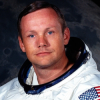
Neil Armstrong
Neil Alden Armstrongwas an American astronaut and the first person to walk on the Moon. He was also an aerospace engineer, naval aviator, test pilot, and university professor. Before becoming an astronaut, Armstrong was an officer in the U.S. Navy and served in the Korean War. After the war, he earned his bachelor's degree at Purdue University and served as a test pilot at the National Advisory Committee for AeronauticsHigh-Speed Flight Station, where he logged over 900 flights. He later...
NationalityAmerican
ProfessionAstronaut
Date of Birth5 August 1930
CityAuglaize County, OH
CountryUnited States of America
A picture does a great job, but it's not nearly like being there.
Perhaps it won't matter, in the end, which country is the sower of the seed of exploration. The importance will be in the growth of the new plant of progress and in the fruits it will bear. These fruits will be a new breed of the human species, a human with new views, new vigor, new resiliency, and a new view of the human purpose. The plant: the tree of human destiny.
I suspect that even though the various questions are difficult and many, they are not as difficult and many as those we faced when we started the Apollo [space program] in 1961.
He did it alone. We had a cast of a million.
NASA has been one of the most successful public investments in motivating students to do well and achieve all they can achieve. It's sad that we are turning the programme in a direction where it will reduce the amount of motivation and stimulation it provides to young people.
As I stepped on the moon, I looked around, dazed...magnifice nt. The vast, sandy silver surface was almost illusory.
There are two of them up here.
Man must understand his universe in order to understand his destiny.
This blowing dust became increasingly thicker. It was very much like landing in a fast moving ground fog.
The [Moon] surface is fine and powdery. I can kick it up loosely with my toe. It does adhere in fine layers like powdered charcoal to the sole and sides of my boots. I only go in a small fraction of an inch, maybe an eighth of an inch, but I can see the footprints of my boots and the treads in the fine sandy particles.
No matter when you had been to this spot before, a thousand years ago or a hundred thousand years ago, or if you came back to it a million years from now, you would see some different things each time, but the scene would be generally the same.
Fear is not an unknown emotion to us.
It's a strange, eerie sensation to fly a lunar landing trajectory not difficult, but somewhat complex and unforgiving.
The view of the moon that we've been having recently is really spectacular. It fills about three-quarters of the hatch window, and of course we can see the entire circumference even though part of it is in complete shadow and part of it is in earthshine. It's a view worth the price of the trip.