Neil deGrasse Tyson
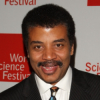
Neil deGrasse Tyson
Neil deGrasse Tysonis an American astrophysicist, cosmologist, author, and science communicator. Since 1996, he has been the Frederick P. Rose Director of the Hayden Planetarium at the Rose Center for Earth and Space in New York City. The center is part of the American Museum of Natural History, where Tyson founded the Department of Astrophysics in 1997 and has been a research associate in the department since 2003...
NationalityAmerican
ProfessionScientist
Date of Birth5 October 1958
CountryUnited States of America
I study the universe. It's the second oldest profession. People have been looking up for a long time.
I've spent quality time in the aerospace community, with my service on two presidential commissions, but at heart, I'm an academic. Being an academic means I don't wield power over person, place or thing. I don't command armies; I don't lead labor unions. All I have is the power of thought.
The solar system should be viewed as our backyard, not as some sequence of destinations that we do one at a time.
In all civilizations we've studied, all cultures that we know of across the Earth and across time have invested some kind of attempt to understanding where where, where they come from, and where they are going.
My parents didn't know much science; in fact, they didn't know science at all. But they could recognize a science book when they saw it, and they spent a lot of time at bookstores, combing the remainder tables for science books to buy for me. I had one of the biggest libraries of any kid in school, built on books that cost 50 cents or a dollar.
Half of my library are old books because I like seeing how people thought about their world at their time. So that I don't get bigheaded about something we just discovered and I can be humble about where we might go next. Because you can see who got stuff right and most of the people who got stuff wrong.
As history has shown, pure science research ultimately ends up applying to something. We just don't know it at the time.
You've never seen me debate anybody. On anything. Ever. My investment of time, as an educator, in my judgment, is best served teaching people how to think about the world around them. Teach them how to pose a question. How to judge whether one thing is true versus another. What the laws of physics say.
I'm baffled all the time. We don't know what's driving 96% of the universe. Everybody you know and love and heard of and think about and see in the night sky through a telescope: four percent of the universe.
Photography is a form of time travel.
I was an aspiring astrophysicist, and that's how I defined myself, not by my skin color. People didn't treat me as someone with science ambitions. They treated me as someone they thought was going to mug them, or who was a shoplifter.
Keep in mind that if you take a tour through a hospital and look at every machine with on and off switch that is brought into the service of diagnosing the human condition, that machine is based on principles of physics discovered by a physicist in a machine designed by an engineer.
Just think for how long humanity was controlled by mystical, magical thinking - the diseases and suffering that led to. We managed to survive, but just barely. It wasn't pretty.
Somehow it's O.K. for people to chuckle about not being good at math. Yet if I said, 'I never learned to read,' they'd say I was an illiterate dolt.